Canada’s CPP Investments Bets $741 Million on India’s AI Infrastructure Surge
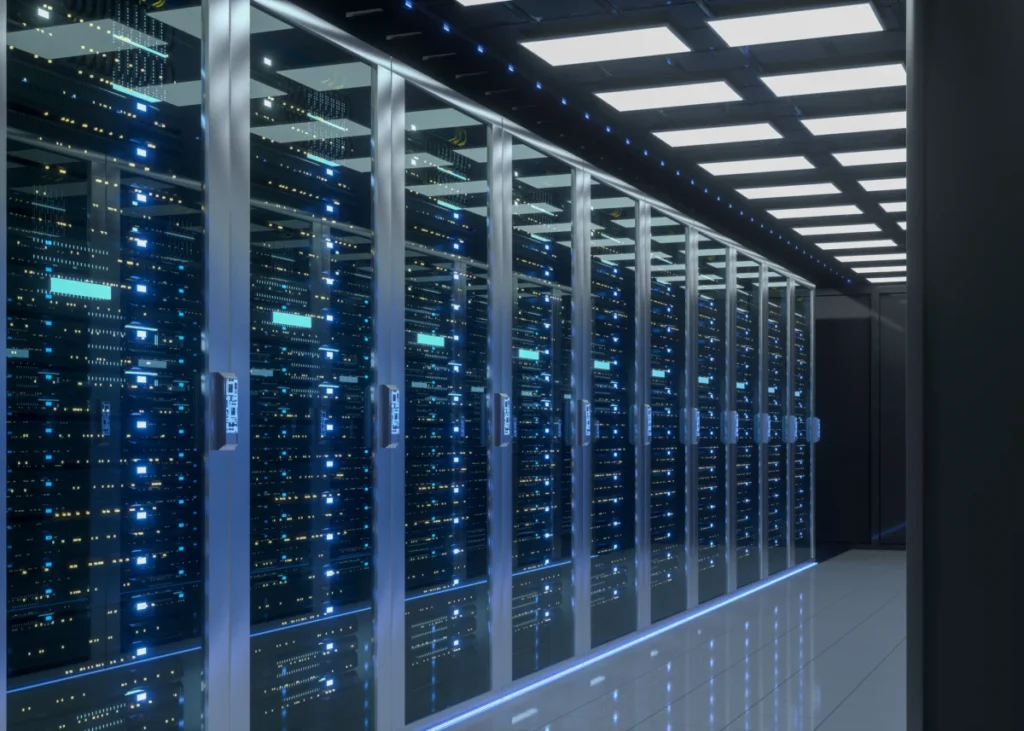
In a move that underscores the tectonic shift in global capital flows, the Canada Pension Plan Investment Board (CPP Investments) has committed up to ₹70 billion (approximately $741 million) to Indian data center operator CtrlS. This landmark investment marks a significant expansion of Canada’s largest pension fund into the heart of Asia’s rapidly evolving digital economy, signaling a high-conviction bet on India’s transformation into a global nerve center for artificial intelligence and cloud computing.
The deal, announced this Wednesday, represents more than just a capital injection; it is a strategic partnership designed to solidify the infrastructure backbone required to sustain the next generation of AI workloads. As the global race for computational dominance accelerates, India is increasingly being viewed not merely as a software services hub, but as a critical destination for the physical hardware that powers the AI revolution.
The Financial Mechanics of the Deal
The partnership is structured in two distinct phases, reflecting a multi-layered approach to capturing value in the digital infrastructure market.
First, CPP Investments will deploy ₹40 billion (approximately $423 million) to acquire an 8.2% equity stake in CtrlS. This direct investment grants the pension fund a significant foothold in one of India’s most established data center operators.
Second, the two entities have established a joint venture (JV) to catalyze the development of hyperscale data center campuses across India. CPP Investments has committed up to ₹30 billion (roughly $317 million) to this entity, with the pension fund holding a 48% stake, while CtrlS retains the remaining 52%. By combining CPP’s deep institutional capital with CtrlS’s decade-plus of operational expertise, the partnership aims to aggressively scale capacity to meet the surging demand from global hyperscalers, local enterprises, and burgeoning AI startups.
A Legacy of Expansion: The CtrlS Trajectory
Founded in 2007, Hyderabad-based CtrlS has spent the better part of two decades positioning itself as a leader in India’s mission-critical data center space. The company currently operates over 15 data centers, a footprint that has become increasingly attractive as the "AI gold rush" creates an insatiable appetite for high-density, low-latency computing environments.
For CtrlS founder and chief executive Sridhar Pinnapureddy, the partnership is a catalyst for the company’s next phase of growth. "The partnership with CPP Investments will help CtrlS expand capacity and build infrastructure tailored specifically for the unique energy and compute requirements of AI workloads," Pinnapureddy noted. This capital will likely accelerate the $2 billion, six-year expansion plan that the company unveiled in 2023, ensuring it remains competitive against global players entering the Indian market.
The Global "AI Infrastructure Race" and India’s Role
The CPP-CtrlS deal is the latest in a rapid succession of multi-billion-dollar investments pouring into India’s digital infrastructure. The country has emerged as a premier destination for global technology giants looking to de-risk their infrastructure dependencies and tap into a rapidly digitizing economy.
Recent months have seen an unprecedented influx of commitments:
- Amazon has pledged an additional $35 billion by 2030, bringing its total planned spending in India to $75 billion.
- Google is moving forward with a $15 billion investment in AI infrastructure hubs.
- Microsoft has committed $17.5 billion through 2029 to bolster its regional AI capabilities.
- OpenAI has tapped the Tata Group to secure 100 megawatts of capacity, with ambitions to eventually scale to one gigawatt.
- AirTrunk, backed by Blackstone, recently announced a massive $30 billion commitment to build five gigawatts of AI-ready data center capacity by 2030.
This flurry of activity is not occurring in a vacuum. New Delhi has actively courted these investments through favorable policy frameworks. Most notably, the Indian government has offered tax exemptions through 2047 for global cloud providers on services sold overseas, provided the underlying workloads are processed within Indian borders. This policy is designed to transform India into an "AI data refinery," where global companies process data locally to benefit from lower costs and regulatory incentives.
Implications: The Infrastructure Paradox
While the rapid expansion of data centers is a boon for India’s GDP and its standing in the global tech hierarchy, it introduces a new set of complex challenges that will define the next decade of development.
The Energy and Water Dilemma
Data centers are notoriously resource-intensive. The move toward "hyperscale" campuses, which can consume hundreds of megawatts of electricity and millions of liters of water for cooling, places significant strain on local utilities. In cities like Hyderabad, Chennai, and Mumbai, where data center clusters are concentrated, the competition for grid power and water resources is intensifying. As India aims to transition to greener energy, the data center boom will likely force a faster integration of renewables, yet the immediate pressure on existing infrastructure remains a critical point of concern for policymakers.
The "Hardware vs. Software" Gap
A striking feature of India’s current tech trajectory is the disparity between its physical infrastructure growth and its indigenous AI model development. While the country is becoming a world-class host for global AI, it is still largely dependent on U.S.-based frontier models. Startups like Sarvam are making strides in building "Made in India" AI models, but the underlying intelligence—the foundational Large Language Models (LLMs)—continues to be supplied by firms like OpenAI, Anthropic, and Google. This creates a potential strategic vulnerability: India is building the "factories" of the AI age, but it remains a consumer, rather than a creator, of the most advanced "blueprints."
Institutional Perspective: Why CPP Investments?
For CPP Investments, this deal is a continuation of a strategy that began in 2009. With net assets of approximately $20 billion in India as of March 31, the fund is already one of the largest foreign institutional investors in the country. Their move into digital infrastructure is not new; the pension fund has been investing in the data center sector globally since 2017.
Max Biagosch, the global head of real assets at CPP Investments, framed the investment as a strategic necessity: "As one of the world’s fastest-growing digital markets, India represents an important pillar of our global data center strategy." For a pension fund managing the retirement savings of millions of Canadians, the long-term, stable returns associated with essential digital infrastructure offer a compelling hedge against the volatility of equity markets.
Conclusion: A Turning Point
The infusion of $741 million into CtrlS by CPP Investments serves as a bellwether for the broader Indian tech sector. It confirms that the narrative around India has shifted: it is no longer just a source of engineering talent, but a primary site for the physical architecture of the global AI economy.
As the country navigates the challenges of energy consumption, water scarcity, and the need for indigenous AI innovation, the success of partnerships like the one between CPP Investments and CtrlS will be closely watched. If the infrastructure buildout is managed sustainably, India is well-positioned to serve as the global engine for AI computing for the next quarter-century. However, the path forward will require a delicate balance between welcoming global capital and ensuring that this digital transformation delivers long-term, equitable benefits for the nation’s infrastructure and its broader economy.