The Great Interest Rate Divide: Navigating the New Normal in Real Estate

The real estate market currently stands at a volatile crossroads, caught between aggressive monetary policy and political pressure. In a recent episode of the On the Market podcast, host Dave Meyer convened a panel of industry experts—Henry Washington, James Dainard, and Kathy Fettke—to dissect the dual shockwaves hitting the housing sector: the Federal Reserve’s decision to hike interest rates for the first time since 2023 and the public call from former President Donald Trump to slash rates to 1% or lower.
As the Federal Reserve maintains a hawkish stance to combat persistent inflation, investors are grappling with a "new normal" of higher borrowing costs. This report examines the implications of this divergence, the outlook for home prices, and how savvy investors are adjusting their portfolios to survive and thrive in an era of diminished affordability.
The Fed’s Pivot: A 25-Basis-Point Reality Check
The central narrative in the housing market this week is the Federal Reserve’s decision to raise the benchmark interest rate by 25 basis points. While the hike itself is modest, the symbolic weight is significant. It represents a unified front—a 12-0 vote—signaling that the central bank remains committed to tempering inflation despite the cooling effect this has on the housing market.
For many investors, this move was the opposite of what they hoped for at the beginning of the year. Market analysts had previously banked on a pivot toward rate cuts; instead, the Fed has signaled that a "higher for longer" environment is the current reality. As Dave Meyer noted during the panel discussion, the market has reached a state of gridlock: buyers are sidelined by record-low affordability, while sellers remain stubborn, refusing to lower prices to meet the new economic climate.
The Political Disconnect: Trump’s 1% Call
Complicating the economic outlook is the political rhetoric surrounding the Fed’s autonomy. In the wake of the rate hike, former President Donald Trump publicly demanded a return to a 1% interest rate environment. This statement has caused confusion among novice investors, prompting the On the Market panel to clarify the distinction between the federal funds rate and mortgage rates.
Federal Funds Rate vs. Mortgage Rates
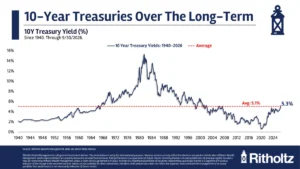
It is essential for investors to understand that the Federal Reserve controls the federal funds rate—the rate at which banks lend to one another overnight. It is not the direct driver of the 30-year fixed mortgage rate. The latter is largely determined by the 10-year Treasury yield and the bond market’s appetite for long-term debt.
The panel argued that if the Fed were to artificially force rates down to 1% in an inflationary environment, the strategy would likely backfire. Bond investors, fearing that low rates would reignite inflation, would demand higher yields on the 10-year Treasury to compensate for the risk. This would ironically drive mortgage rates higher, potentially pushing them toward 9% rather than lower. Therefore, while a 1% rate might benefit short-term commercial debt, it would prove catastrophic for the stability of the residential housing market.
Impact on Housing Demand and Valuation
Despite the gloomy headlines, the panel expressed a nuanced, cautiously optimistic view regarding the long-term health of the real estate market. The prevailing sentiment is that the industry is not heading toward a 2008-style crash, but rather a necessary correction.
Cooling Markets vs. Resilient Pockets
Data indicates that while prices are cooling in 46 major metropolitan areas, they continue to rise in 54 others. This disparity is largely driven by regional economic factors, such as the AI boom in the San Francisco Bay Area, which continues to drive high-end real estate prices upward despite national trends.
For residential investors, the current market is defined by "low volume." Sellers who do not have to sell are staying put, leading to a shortage of inventory. This has resulted in an uptick in canceled listings—a phenomenon rarely seen in high-demand markets. However, the panel noted that these cancellations rarely lead to drastic price cuts, suggesting that homeowners are choosing to wait out the cycle rather than panic-sell.
Strategic Adjustments for the Modern Investor
The consensus among the experts is clear: the era of "buying and praying" for appreciation is over. To succeed in today’s high-rate environment, investors must adopt a more disciplined, surgical approach to their portfolios.
1. The Power of "Buy Boxes"
James Dainard emphasized the importance of having a clearly defined "buy box." In an unstable market, investors must know exactly what they are willing to buy and what specific return they require. If a property does not meet those rigorous criteria, the best decision is to walk away. The panel warned against "borderline" deals that require everything to go perfectly to achieve profitability.
2. Creative Financing and Liquidity
As traditional flipping becomes more challenging, investors are turning to creative financing strategies. For those holding properties with thin margins, refinancing to pull out four-month interest reserves can provide the necessary runway to hold assets until the spring market. Liquidity is currently the most valuable asset; investors who maintain enough cash to weather temporary downturns are better positioned to capitalize on opportunities when they arise.
3. Leveraging Builder Incentives
Kathy Fettke pointed out that homebuilders are currently struggling with high inventory and low sentiment. Consequently, they are offering significant incentives, including rate buydowns and price concessions. For the individual buyer, this is a prime opportunity to secure a home at a discount while using seller-funded points to lower their monthly mortgage payment into a more manageable range.
4. Focusing on the Expense Side
In an inflationary environment where rents may not be able to keep pace with rising costs, investors must become experts at managing expenses. This includes consolidating insurance policies across portfolios, conducting more rigorous inspections to avoid surprise repairs, and negotiating aggressively on purchase prices.
The Long-Term Outlook: A Silver Lining
While the immediate future involves high interest rates and reduced transaction volume, the panel concluded that these conditions are ultimately a "good thing" for the long-term health of the U.S. economy. By controlling inflation now, the market can eventually return to a more sustainable, normalized state.
For the buy-and-hold investor, the current market is beginning to show signs of efficiency—or rather, a shift toward a buyer’s market. With the potential for home prices to experience a modest decline of 3% to 5% in many regions, those with capital and patience will find opportunities that have been absent for the last four years.
As the industry prepares for upcoming events like the BiggerPockets Conference (BP Con), the core message remains: avoid the noise of the headlines. Focus on long-term strategy, maintain your liquidity, and remain disciplined in your underwriting. The market is not collapsing, but it is changing—and for those who adapt, the current challenges may well become the foundation for their next phase of wealth creation.
In the words of the panel, "Patience is the number one thing right now." While the short-term environment is challenging, the long-term outlook for real estate remains a powerful vehicle for building wealth, provided investors move with clarity rather than reaction.