Bridging the Innovation Gap: Bank of America’s Strategy to Shape the Future of Fintech
In the rapidly evolving landscape of global finance, the line between traditional banking and cutting-edge technology has blurred into irrelevance. For the United States’ second-largest financial institution, Bank of America (BofA), staying at the forefront of this transformation is not merely a goal—it is a $14 billion annual necessity.
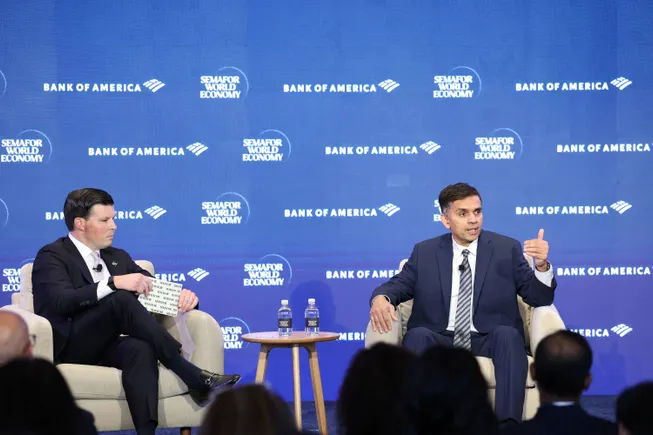
As the bank prepares for its 15th annual Technology Innovation Summit in San Francisco, leadership is signaling that this high-stakes gathering is more than a networking event. It is a strategic mechanism for institutional evolution, designed to bridge the gap between agile, disruptive startups and the complex, highly regulated requirements of a $3.5 trillion-asset financial powerhouse.
Main Facts: The Intersection of Capital and Code
The invitation-only summit, scheduled for October 7, serves as a high-level crucible for innovation. It brings together approximately 500 hand-picked technology founders and venture capitalists to interface directly with the bank’s global technology unit, as well as its elite investment banking and capital markets divisions.
The event’s primary objective is twofold: scouting for potential partners and pressure-testing the bank’s internal tech roadmap. According to Hari Gopalkrishnan, Bank of America’s Chief Technology and Information Officer, the summit acts as a vital "outside-in" lens. By engaging with startups specializing in artificial intelligence, enterprise infrastructure, information security, and software development, the bank gains a comprehensive view of how the external ecosystem is tackling the same problems its own engineers face daily.
The success of this model is evidenced by historical data: over the past 15 years, approximately 20% of the 7,000 companies that have participated in the summit have gone on to become official vendors for the bank. Past successes include the integration of the data platform Redis and the business intelligence powerhouse Tableau (now a subsidiary of Salesforce), both of which utilized the summit as a launchpad for their enterprise-grade partnerships with BofA.
Chronology: Fifteen Years of Strategic Evolution
The 15th anniversary of the summit marks a significant milestone in Bank of America’s long-term digital transformation strategy.
- The Foundational Years: Initially, the summit was designed as a bridge between the bank’s capital markets division and the booming Silicon Valley ecosystem, focusing on investment opportunities and early-stage software procurement.
- The Scaling Era: As the bank’s internal tech stack grew more complex, the summit evolved into a venue for solving specific enterprise-level friction points, such as cloud migration and legacy system modernization.
- The Current Phase (2024 and Beyond): Today, the event is defined by the "AI imperative." With CEO Brian Moynihan committing to a significant increase in AI investment—doubling the budget for the upcoming year—the summit has shifted its focus toward the practical, ethical, and secure implementation of generative AI and automated infrastructure management.
Supporting Data: The Cost of Modernization
Bank of America’s commitment to technology is reflected in its massive annual expenditure. With a total annual technology budget of $14 billion, the bank allocates roughly $4 billion specifically toward new initiatives. This scale is necessary to maintain a competitive edge in a global market where customer expectations for digital personalization, speed, and security are at an all-time high.
The impact of the summit on these investments is tangible. By hosting these sessions, BofA leadership gains access to a "comprehensive view" of global innovation. When the bank hosts sessions on, for instance, the future of software development, it invites external firms to weigh in on risk management, testing, and modernization. This feedback loop often prevents the bank from falling into the "sunk cost fallacy" of internal projects, allowing leadership to "shift gears" when external data suggests a better or faster alternative exists.
Official Responses and Strategic Insight
Hari Gopalkrishnan, who plays a central role in orchestrating these connections, views the summit as a two-way educational journey. In an interview, he emphasized that while the bank scouts for solutions, it also serves as a mentor for startups that lack the "enterprise maturity" required to operate within a highly regulated global financial institution.
"The flip side of it is, we actually get to talk to these people about [what] it takes to take the stuff they’re building and implement it at scale at a large enterprise," Gopalkrishnan noted. He highlighted that many founders, while brilliant in their niche, often overlook the realities of security at scale, the complexities of multilingual data management, and the rigorous governance required for cross-border financial transactions.
By articulating the bank’s specific requirements—what they call "the art of the possible"—BofA helps these companies refine their products. This collaboration, Gopalkrishnan argues, creates a superior end-product that is "bank-ready" from day one. It is a symbiotic relationship: the bank gets a bespoke solution to a pressing problem, and the startup gains a marquee client and a roadmap for enterprise compliance.
Implications: The Future of Banking Infrastructure
The implications of this summit are far-reaching, both for the bank and the broader fintech industry.
The Governance Gap
One of the most critical sessions at the summit addresses the "Wall Street reality check." Startups often enter the market with a "move fast and break things" mentality. However, when dealing with a global bank, the priority must be "move securely and maintain compliance." The summit provides a crash course in governance, covering third-party risk management, AI model transparency, and regulatory compliance. This is a significant value-add for the tech ecosystem, effectively raising the bar for what constitutes a "viable" fintech solution.
The AI Frontier
Artificial Intelligence is the centerpiece of this year’s agenda. For Bank of America, AI is not just a buzzword; it is a tool for infrastructure optimization. Gopalkrishnan is particularly interested in how AI can automate infrastructure management and enhance software engineering productivity. However, this is balanced by a deep focus on risk. Countering the risks associated with AI—such as data leakage, algorithmic bias, and security vulnerabilities—is a primary concern. The bank is looking for partners who understand not just the power of AI, but the necessity of "AI guardrails."
Payment Systems and Personalization
Beyond the abstract, the bank remains focused on its core: the movement of money. Payments remain a perennial area of interest. As the world moves toward real-time, cross-border digital payments, the bank is searching for agile partners who can help it navigate the complexities of global clearing systems. Furthermore, marketing and personalization are high on the priority list; in an era where data is abundant, the bank aims to move beyond generic offerings to provide hyper-personalized financial insights to its vast customer base.
Conclusion: A Culture of Collaborative Innovation
Bank of America’s Technology Innovation Summit is a testament to the fact that in the modern era, no institution can innovate in a vacuum. By opening its doors to the startup community, the bank is not just buying technology—it is actively participating in the definition of its future.
As the financial sector continues to face threats from cyber-adversaries and competitive pressures from tech-native challengers, the ability to synthesize internal research with external breakthroughs will define the winners of the next decade. For BofA, the strategy is clear: invite the disruptors into the room, educate them on the realities of scale, and let the resulting collaboration drive the next generation of banking excellence. Whether this leads to a minor pivot in software deployment or a major shift in AI strategy, the bank is positioning itself to be a permanent, modernized force in the global economy.