From the Drive-Thru to the C-Suite: How Drew Travis’s Lifelong Passion for Hospitality Led Him to Chicken Salad Chick’s Top Financial Post
ATLANTA — For Drew Travis, the restaurant business is more than a balance sheet—it is a lifelong vocation. Long before he was tapped to oversee the financial architecture of the rapidly expanding fast-casual brand Chicken Salad Chick, Travis’s journey began where many teenagers start: behind a cash register.
From flipping burgers at McDonald’s to serving tables at Famous Dave’s Bar-B-Que and managing shifts during his college years at Michigan State University, Travis learned the heartbeat of the hospitality industry from the ground up. Today, as the newly appointed Chief Financial Officer of Chicken Salad Chick, Travis brings that grassroots operational empathy directly into the corporate boardroom. As the Atlanta-based southern-style restaurant chain stands at a critical juncture in its national expansion, Travis’s unique blend of front-line restaurant experience and high-level corporate finance positions him to steer the company through its next major growth phase.
Main Facts: A New Financial Chapter for a Growing Brand
The appointment of Drew Travis as CFO marks a pivotal milestone for Chicken Salad Chick as the brand aggressively scales its operations nationwide. Founded in Auburn, Alabama, in 2008 by Stacy and Kevin Brown, the concept has evolved from a local favorite into a dominant regional player boasting over 340 restaurants across 25 states.
Backed by the consumer-focused private equity firm Brentwood Associates—which acquired a majority interest in the chain’s parent company, SSRG Holdings, in 2019—Chicken Salad Chick is accelerating its footprint. The brand’s strategic roadmap includes penetrating entirely new markets, with active expansions underway this year into West Virginia, New York, and Michigan.
Travis steps into this role with a clear mandate: to balance rapid, capital-intensive expansion with the rigorous financial discipline required to maintain profitability, navigate persistent food inflation, and preserve the company’s distinct hospitality-driven culture.
Chronology: From Flipping Burgers to Corporate Finance
Travis’s professional trajectory offers a compelling study in how early operational immersion can shape a high-level executive career. His timeline reflects a deep-rooted commitment to the food service sector, interspersed with elite financial training:
- The Early Years: During high school, Travis took a job at McDonald’s, handling everything from cooking burgers to managing the drive-thru and taking orders at the service counter. He later gained further experience working at Famous Dave’s Bar-B-Que.
- Collegiate Roots: While studying at Michigan State University, Travis stayed close to the industry, working at his uncle’s restaurants as a server, bartender, and assistant manager.
- The Corporate Pivot: After completing his undergraduate studies, Travis briefly stepped outside the restaurant space, working as a financial analyst and later taking on a senior role in Financial Planning and Analysis (FP&A) at Discover Financial Services.
- Advanced Education and Industry Return: Seeking to merge his analytical acumen with his industry passion, Travis earned an MBA from Northwestern University. Over the past decade, he has held progressively senior finance roles across major players in the food and hospitality space. His resume includes stints as a senior finance leader at food delivery giant Grubhub, director of finance and FP&A at Bloomin’ Brands (owner of Outback Steakhouse), and nearly five years in senior finance leadership at GoTo Foods (operator of Auntie Anne’s pretzels and Carvel ice cream).
- The Present: Travis assumes the CFO role at Chicken Salad Chick, bringing decades of multi-brand and single-brand financial leadership to bear on the company’s expansion strategy.
Supporting Data: The Economics of Scaling a Franchise Empire
The financial mechanics of expanding a fast-casual restaurant chain are complex and capital-intensive. Travis notes that the average Chicken Salad Chick location spans between 2,500 and 3,500 square feet. When factoring in construction, specialized kitchen equipment, technology, furniture, and exterior signage, the typical buildout cost hovers around $700,000 per store.
To manage this capital expenditure effectively without overextending the corporate balance sheet, Travis and the executive team rely heavily on a franchise-driven growth model.
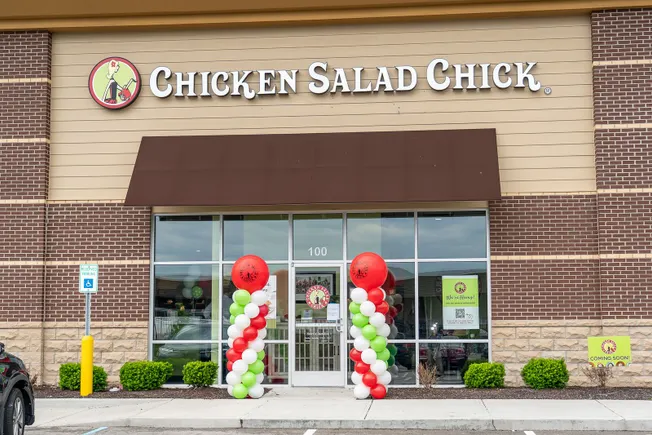
- Target Footprint: The company is aggressively targeting a milestone of surpassing 500 total units over the next few years.
- Franchise Contribution: Franchise owners invest their private capital to construct and open individual units. In return, corporate headquarters provides comprehensive operational, marketing, and training support.
- Corporate Investment: Rather than sinking excessive capital directly into real estate buildouts, Chicken Salad Chick’s corporate investments are strategically directed toward human capital, advanced operational processes, and scalable technology systems designed to empower franchise partners.
Official Responses: Culture Meets Capital Allocation
For Travis, transitioning from supporting diverse multi-brand portfolios at conglomerates like GoTo Foods to focusing intensely on a single, focused culinary concept has been both refreshing and energizing. What struck him most upon joining the Atlanta-based company was the unwavering commitment to hospitality—a value championed not just by front-line staff, but by the executive suite.
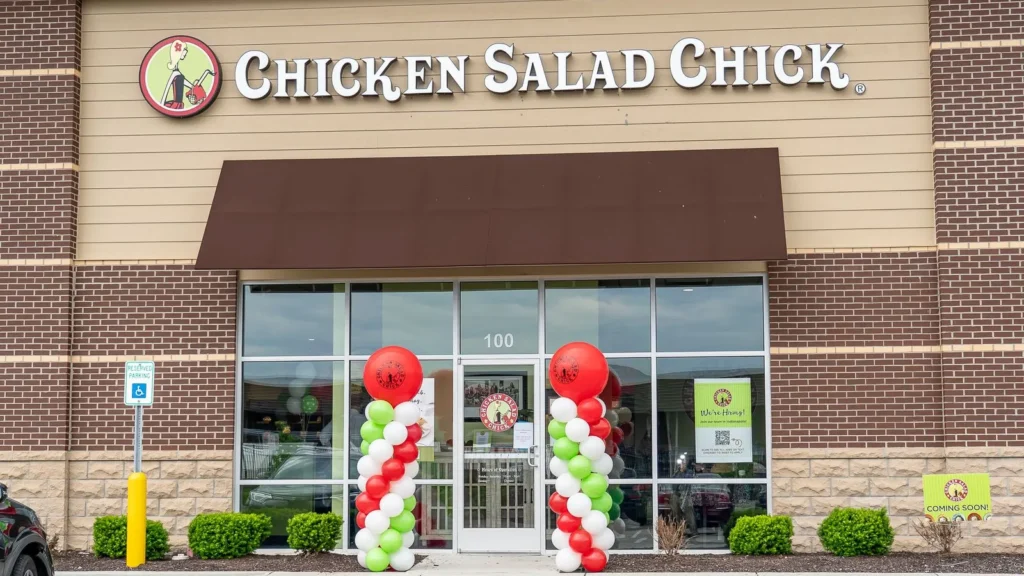
Speaking by phone from West Virginia—where he was traveling to attend the grand opening of a new franchise location—Travis emphasized that participating in store launches is a non-negotiable part of his executive philosophy.
"I’m blown away by the culture and people here," Travis said. Reflecting on his presence at the store opening alongside other corporate leaders including the CEO, he added, "In past lives of mine [that] was probably not part of my remit, but at this brand it certainly is. It’s important to make time for such events to show support for franchisees."
This hands-on leadership style directly influences his approach to the company’s financial health, particularly regarding consumer pricing pressures and inflation. Amid persistent food inflation across the broader restaurant sector, Travis and his team have maintained a cautious stance on raising menu prices.
"Pricing is a slippery slope in the restaurant industry," Travis explained, noting that steep price hikes can deter customer traffic, ultimately forcing a smaller customer base to bear an inflated share of fixed operational costs. Instead of leaning on price increases to protect margins, the executive team prioritizes delivering exceptional value through unique customer experiences and differentiated hospitality.
Implications: Navigating Growth Without Losing Identity
As Chicken Salad Chick marches toward its goal of exceeding 500 locations, Travis views the company as occupying a critical "inflection point." The challenges ahead are multifaceted, requiring a delicate balance between rapid scaling and cultural preservation.
- Preserving Organizational Culture: As the organization grows beyond 340 units, maintaining the close-knit, community-oriented culture established by founders Stacy and Kevin Brown will require deliberate effort. Travis stresses that corporate processes must evolve to fit a larger organization, but warns that operational scaling must never dilute the core values of the brand.
- Inflationary Pressures and Margin Management: With supply chain costs remaining volatile, the finance team will need to continually optimize corporate overhead, leverage technology, and support franchisees in operational efficiency to protect profitability without alienating price-sensitive consumers.
- The Enduring Pull of Hospitality: Despite the well-documented volatility and daily curveballs of the restaurant industry—ranging from staffing shortages to supply chain disruptions—Travis remains firmly committed to the sector.
"Every single day you’re cooking food and cleaning, and there’s always going to be curveballs," Travis reflected. "But if you can be successful in it, it’s a really fun industry. It pulls you in."
With a seasoned finance leader who understands both the spreadsheet and the service counter, Chicken Salad Chick appears uniquely equipped to navigate its next chapter of national growth while keeping its hospitality-first ethos firmly intact.