The AI Divide: How Workplace Technology Literacy is Reshaping Job Security and the Global Labor Market
By Global Business and Technology Desk
Published: September 29, 2026
Main Facts
The modern workplace is experiencing a profound structural transformation, defined less by traditional markers of experience and more by a single, decisive metric: artificial intelligence proficiency. According to a landmark global study released by PwC, more than half of the world’s workforce feels they are actively falling behind their AI-savvy colleagues. This widening knowledge gap is no longer just a matter of professional pride or personal capability; it has become a fundamental driver of job security, career mobility, and economic stratification.
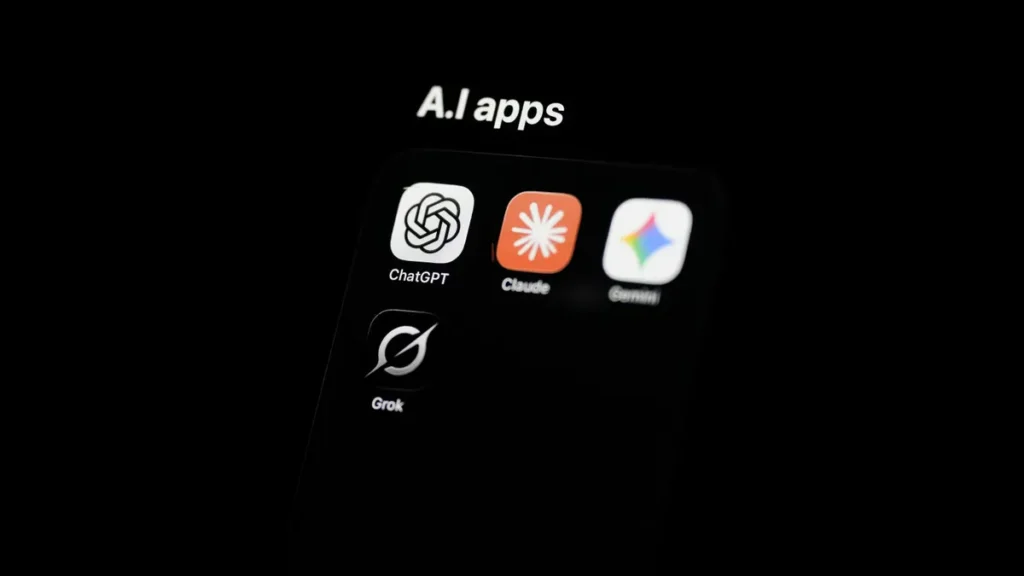
The data reveals a stark bifurcation among employees. On one side are the AI-fluent "haves," a cohort that leverages tools like ChatGPT, Claude, Gemini, and Grok to streamline workflows, augment their daily output, and enhance their market value. This group boasts high levels of confidence, with nearly 29% expressing a high likelihood of seeking and securing new career opportunities in the coming year without fearing unemployment. On the other side are the AI-lagging "have-nots"—a majority of workers who report feeling unprepared to adapt to rapid technological shifts, with only half expressing confidence in their ongoing job security.
This evolving dynamic underscores a broader macroeconomic trend: the emergence of a "two-track" labor market. While some analysts and economists argue that artificial intelligence serves as a net creator of employment opportunities, the reality on the ground is far more nuanced. Technology is not merely replacing jobs; it is deeply altering the value of specific skills, creating an elite tier of tech-enabled workers while leaving the digitally uninitiated vulnerable to professional obsolescence.
Chronology of Workplace AI Integration
The journey from experimental chatbot integration to defining the architecture of the global labor market has been swift and disruptive. Tracing the timeline of AI adoption provides essential context for the anxieties and opportunities currently documented by workforce researchers:
- Late 2022 to Throughout 2023: Generative AI bursts into the public consciousness with the widespread deployment of consumer-facing large language models. Enterprises scramble to formulate usage policies, initially oscillating between outright bans due to data security concerns and unbridled experimentation.
- Throughout 2024: Organizations move past the novelty phase. Businesses begin investing heavily in channel partners, cloud infrastructure, and enterprise-grade software integration. Despite multi-billion-dollar investments in potential AI services, many companies realize they lack the internal talent and training infrastructure needed to scale the technology effectively.
- Early 2025: The first structural labor market impacts become apparent. Companies begin restructuring mid-level administrative, analytical, and creative roles. Employees who independently teach themselves prompt engineering, data pipeline management, and AI-assisted workflows begin to stand out from their peers.
- June 2026: PwC releases its comprehensive AI Jobs Barometer, formally identifying the "two-track" labor market phenomenon. The report highlights how professional roles requiring deep human expertise paired with AI leverage are commanding premiums, while routine tasks performable by non-experts using basic AI commands face margin compression.
- May and June 2026: PwC fields its extensive Global Workforce Hopes and Fears Survey, collecting data from nearly 50,000 workers across 29 industries and 48 countries to quantify employee sentiment regarding job security and technological change.
- Late September 2026: High-ranking government officials, including White House National Economic Council Director Kevin Hassett, address the macroeconomic implications of AI, publicly asserting that automation and generative technologies are net job creators, even as workforce surveys highlight deep-seated anxieties among unprepared employees.
Supporting Data and Demographic Insights
The empirical foundation for these workforce trends is drawn from PwC’s Global Workforce Hopes and Fears Survey 2026, conducted across May and June of that year. The research is broad in scope, capturing the lived experiences of 49,364 workers spanning 48 countries and 29 distinct business sectors.
Key Quantitative Findings:
- The Literacy Gap: More than 50% of all surveyed workers explicitly stated that they are falling behind colleagues who possess advanced artificial intelligence capabilities.
- The Confidence Dividend: Among the top-tier cohort of AI-proficient employees, 29% are actively planning to transition to new roles within the next year, propelled by absolute confidence in their marketability and job security.
- The Vulnerability Baseline: Conversely, workers in the bottom quartile of AI proficiency report the lowest readiness scores regarding adaptability, with only 50% expressing confidence that their current roles will remain secure over the medium term.
- Global Reach: The surveyed population of nearly 50,000 individuals provides a cross-cultural view of technological anxiety, proving that the divide is not isolated to Silicon Valley or financial hubs, but is instead a universal phenomenon affecting emerging and developed economies alike.
This empirical data aligns with previous iterations of PwC’s labor analytics. The June 2026 AI Jobs Barometer illustrated that productivity gains are concentrated among workers who can successfully orchestrate AI tools to perform complex, multi-step projects. Rather than a simple story of humans versus machines, the data points to a reality of humans with AI versus humans without AI.
Official Responses and Economic Perspectives
The societal implications of this technological wave have triggered intense debate among economists, policymakers, and corporate leaders. The overarching question is whether the widespread adoption of generative AI will precipitate mass unemployment or usher in a new era of human productivity and economic growth.

Weighing in on this debate, Kevin Hassett, director of the National Economic Council, delivered a notable address at the Economic Club of New York. Countering apocalyptic narratives of widespread job destruction, Hassett argued that artificial intelligence is acting as a powerful engine for job creation. According to White House economic projections, the efficiency dividends generated by AI implementation stimulate business expansion, lower operational costs, and generate entirely new categories of employment that did not exist a decade ago.
However, labor economists and organizational psychologists warn that aggregate macroeconomic growth does not automatically translate into individual security. While top-down economic indicators may point toward job creation, micro-level friction remains severe. Workers who lack access to corporate-sponsored upskilling programs or who struggle to master software interfaces face structural barriers to entry into these newly created roles.
Corporate leadership is similarly divided. While channel partners and software vendors eye billions of dollars in potential artificial intelligence services revenue, many enterprise executives admit privately that their organizations remain unprepared to scale the technology equitably. Upskilling initiatives are frequently uneven, often favoring high-value technical departments while leaving administrative, operational, and frontline employees to fend for themselves.
Broader Implications for the Future of Work
The emergence of the AI-driven two-track labor market carries profound long-term consequences for corporations, educational institutions, and society at large.

1. The Corporate Imperative for Upskilling
Organizations can no longer treat artificial intelligence literacy as an optional elective for tech enthusiasts. To mitigate the anxiety documented in the PwC survey, enterprises must democratize access to AI training. Companies that fail to bridge the internal knowledge gap risk creating toxic internal cultures characterized by resentment, low morale, and high turnover among anxious employees, alongside stagnating productivity among the untrained majority.
2. Evolution of Educational Systems
The traditional pipeline from university education to corporate employment is undergoing forced evolution. K-12 and higher education institutions are being pressured to integrate foundational AI literacy, critical evaluation of machine-generated outputs, and prompt engineering into standard curricula. Without these baseline educational reforms, new graduates will enter the workforce already lagging behind the curve.
3. Economic Mobility and Inequality
Perhaps the most significant societal implication is the risk of widening income inequality. If the labor market permanently rewards individuals who can leverage AI to multiply their output while depressing wages or eliminating roles for routine labor, middle-class stability could be severely compromised. Policymakers will increasingly be forced to consider social safety nets, continuous public education grants, and regulatory frameworks to ensure that the dividends of artificial intelligence are distributed broadly rather than captured exclusively by a tech-fluent elite.
As the workplace continues to adapt through the remainder of the decade, closing the AI divide is no longer just a human resources challenge—it is an economic necessity for sustainable growth and social cohesion.