The Twilight of the Post-War Order: Rebuilding Liberal Democracy in an Age of Fragmentation
By Gene Frieda
Published: September 25, 2026
Main Facts
Modern liberal democracy is experiencing an unprecedented structural crisis. In nations where citizens have known no other political system, democratic frameworks are buckling under the weight of economic inequality, institutional decay, and aggressive geopolitical realignments. Established political parties are hemorrhaging public support, while populist movements—once confined to the fringes of the political spectrum—have successfully transitioned into the mainstream of governance and policymaking.
At the global level, the multilateral, rules-based postwar order is rapidly giving way to a fractured system defined by zero-sum competition. Governments increasingly weaponize economic tools, utilizing aggressive tariffs, sweeping sanctions, and supply chain nationalism as standard instruments of statecraft. The idealistic promise of globalization has been superseded by a return to traditional spheres of influence and naked exercises of raw power.
While analysts, political scientists, and pundits frequently debate the root causes of liberalism’s decline—pointing fingers at technological disruption, cultural shifts, or the failures of technocratic governance—searching for a single culprit remains a futile exercise. The crisis is systemic, cumulative, and multifaceted.
Stepping into this intellectual vacuum, two major new books—authored respectively by former British Prime Minister Gordon Brown and renowned economist Daron Acemoglu—bypass the circular debates of blame. Instead, they tackle the much harder, more urgent question: How can societies rebuild the foundational institutions that once provided citizens with a tangible sense of community, economic security, and meaningful agency over their own lives?
Chronology: The Erosion of the Liberal Consensus
To understand how contemporary liberal democracy arrived at this precipice, it is necessary to examine the historical trajectory that dismantled the postwar consensus.
1945–1970s: The Golden Age of Institutional Stability
Following the devastation of the Second World War, Western democracies constructed a robust architecture of international cooperation and domestic social contracts. The Bretton Woods institutions, the United Nations, and the General Agreement on Tariffs and Trade (GATT) established a framework for international commerce and conflict resolution. Domestically, the Keynesian consensus ensured that economic growth was paired with expanding welfare states, robust labor unions, and public investments that fostered a thriving middle class.
1980s–2000: The Neoliberal Turn and Hyper-Globalization
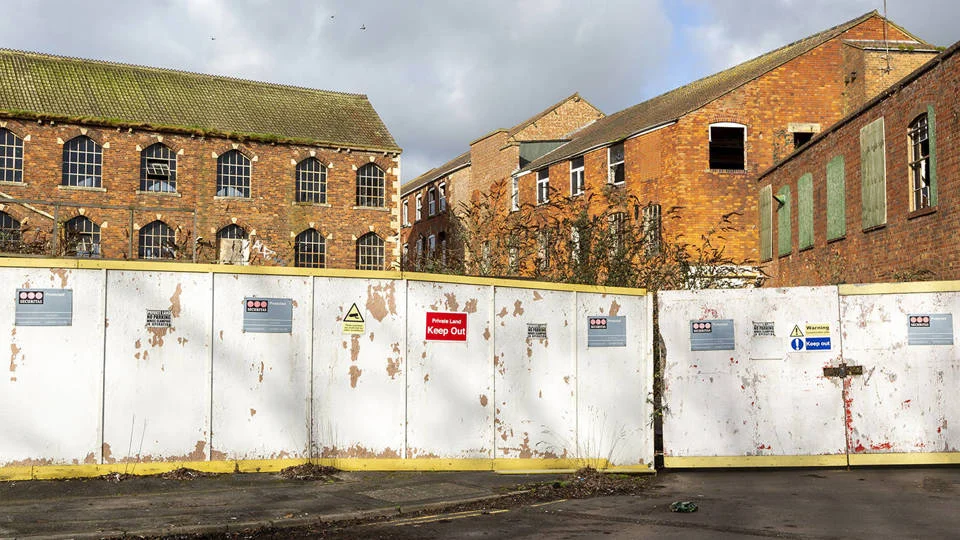
The stagflation crises of the 1970s paved the way for the ascendance of neoliberal economic policies under leaders like Margaret Thatcher and Ronald Reagan. The subsequent decades were defined by financial deregulation, the privatization of public assets, the systematic weakening of organized labor, and the acceleration of hyper-globalization. While this era generated immense aggregate wealth and lifted hundreds of millions out of poverty globally, it hollowed out traditional industrial communities in the West, suppressed wage growth, and concentrated capital in major urban and financial hubs.
2008–2016: The Great Recession and the Populist Awakening
The global financial crisis of 2007–2008 exposed the severe vulnerabilities of deregulated global finance. The subsequent austerity measures implemented across Europe and North America disproportionately impacted working-class populations, while major financial institutions were bailed out by taxpayers. This perceived injustice shattered public trust in technocratic elites. The political fallout materialized definitively in 2016 with twin shocks: the United Kingdom’s vote to leave the European Union (Brexit) and the election of Donald Trump in the United States, signaling the arrival of the populist era.
2020–Present: Pandemics, Protectionism, and Power Politics
The COVID-19 pandemic further exposed the fragility of globalized supply chains, prompting nations to turn inward. This trend was supercharged by geopolitical conflicts, most notably the war in Ukraine and rising tensions between the United States and China. Today, industrial policy has returned with a vengeance, but it is driven less by cooperative internationalism and more by national security paranoia, trade wars, and transactional diplomacy.
Supporting Data: The Metrics of Democratic Decay
The decline of liberalism is not merely a theoretical observation; it is substantiated by a wealth of empirical data collected by international watchdogs, economic institutions, and sociological researchers.
- Democratic Backsliding: According to independent democracy research institutes, the number of countries experiencing democratic erosion has outpaced the number of democratizing nations for nearly two decades. Freedom House data indicates that global freedom has declined for 18 consecutive years.
- Erosion of Trust in Institutions: Edelman Trust Barometer surveys consistently show that public trust in government, media, and traditional political parties sits near historic lows across Western democracies. A majority of citizens in G7 nations believe that the current economic system is biased in favor of the rich and powerful.
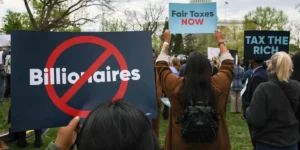
- The Wealth Gap: Data from the World Inequality Lab reveals that the top 10% of earners globally capture more than 50% of all income, while the bottom half captures less than 10%. Within advanced economies, the share of national income going to labor has steadily declined since the 1980s, directly fueling working-class resentment.
- Electoral Volatility: In Europe, the vote share captured by traditional center-left and center-right parties has plummeted from over 70% in the late 20th century to historical lows below 50% in many jurisdictions today, replaced by surging populist factions from both the radical right and radical left.
Official Responses and Strategic Debates
As the cracks in the liberal order widen, political leaders, international organizations, and economic theorists are fiercely debating the appropriate policy responses. Broadly speaking, responses fall into three distinct camps:
1. The Technocratic Defense
Mainstream political establishments in Brussels, Washington, and London have largely responded by doubling down on institutional defense, regulatory compliance, and incremental policy adjustments. Proponents of this view argue that liberal democracy’s core institutions remain sound, but that communication of their benefits has failed. They advocate for targeted social safety net expansions and digital transformation initiatives while maintaining the overarching architecture of global trade and alliances.
2. The Neo-Nationalist Pivot
Governments across the political spectrum have increasingly embraced a neo-nationalist or realist playbook. Recognizing public fatigue with unchecked globalization, center-left and center-right administrations alike have adopted protectionist industrial policies—such as the United States’ Inflation Reduction Act and the European Union’s Net-Zero Industry Act. These policies aim to reshore critical manufacturing and secure strategic supply chains, albeit at the cost of fracturing international economic integration.
3. The Institutional Reconstructionist Approach
It is within this contentious landscape that the new works by Gordon Brown and Daron Acemoglu find their footing. Rather than defending the status quo or retreating into reactionary nationalism, both authors argue for a fundamental reimagining and rebuilding of civic and economic institutions.
Brown emphasizes the necessity of reviving local civic engagement and reforming global governance structures to address transnational challenges like climate change and financial instability. Acemoglu, drawing on his extensive historical and economic research, focuses on the relationship between technology, state capacity, and democratic accountability, arguing that societies must regain control over technological trajectories to ensure they serve broad human welfare rather than narrow corporate monopolies.
Implications: What Lies Ahead for the Liberal Project?
The intersection of democratic decay, economic inequality, and geopolitical fragmentation carries profound implications for the future of global stability.
First, the retreat from multilateralism threatens to make the world economy less efficient and more prone to inflationary shocks. As the rules-based trading system fractures into competing blocs, the transaction costs of international commerce will rise, stifling global growth and disproportionately impacting developing nations caught in the crossfire of great power competition.
Second, the erosion of domestic democratic norms creates fertile ground for authoritarian governance models. When democratic institutions fail to deliver tangible improvements in living standards or security, citizens become increasingly receptive to strongman politics, executive overreach, and the curtailment of civil liberties in exchange for the promise of order.
Finally, the works of thinkers like Brown and Acemoglu serve as a crucial reminder that liberalism was never a self-sustaining perpetual motion machine. It was built through deliberate political struggle, institutional design, and a commitment to civic participation. Rebuilding it requires moving past the nostalgic desire to return to the 1990s or the 2000s—an era whose internal contradictions generated today’s crises.
Instead, the path forward demands structural courage: redesigning economies to reward labor rather than pure capital, harnessing technology for democratic empowerment rather than surveillance and polarization, and forging new forms of international cooperation capable of managing a multipolar world. If liberal democracy is to survive its current twilight, it must prove once again that it can offer ordinary people genuine agency, economic security, and a compelling vision of a shared future.