The Shifting Landscape of Real Estate: Why “Market Distress” Isn’t What You Think
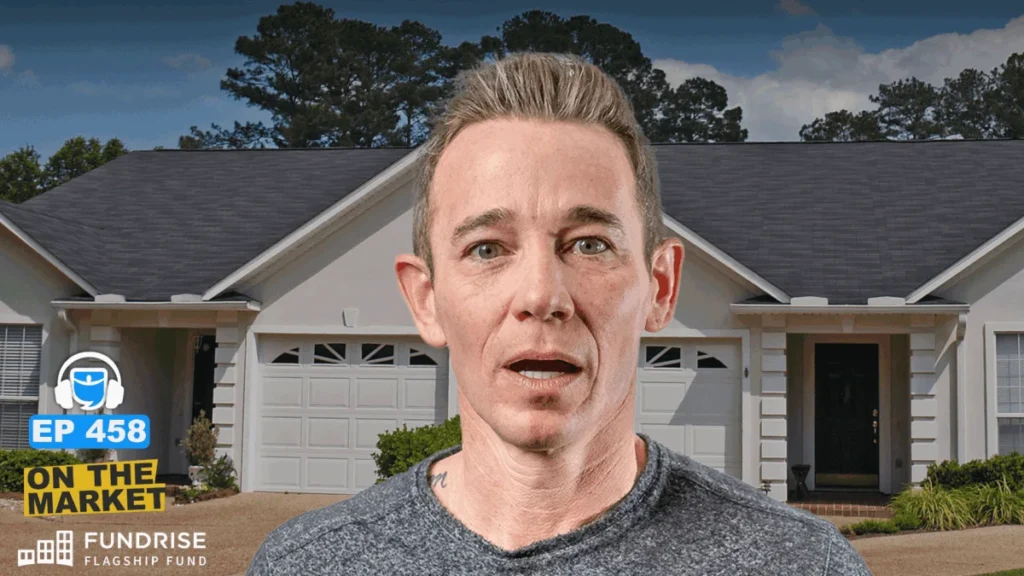
The housing market is currently sending a cascade of mixed signals that have left casual observers and seasoned investors alike searching for clarity. Recent headlines warning of an 18% spike in foreclosure starts have triggered widespread anxiety, fueling narratives of a looming housing crash. However, a deeper examination of the data—and the voices of those working on the front lines of real estate—reveals a more nuanced, albeit challenging, reality.
On a recent episode of On the Market, hosts James Dainard, Kathy Fettke, and Henry Washington dissected these trends. Their consensus is clear: while the market is undoubtedly shifting toward a more balanced, albeit difficult, state, the sky is not falling. Instead, the current environment is creating a unique, opportunistic landscape for investors who are prepared to pivot, operate with fiscal discipline, and look past the sensationalism of mainstream media.
The Main Facts: Distinguishing Headlines from Reality
The current atmosphere of uncertainty is largely driven by data released by ATTOM Data Solutions, which noted an 18% increase in foreclosure starts during the first half of 2026, totaling approximately 227,000 properties. To the average consumer, this sounds like a harbinger of the 2008 financial crisis.
However, industry veterans argue that this perspective is fundamentally flawed. Kathy Fettke emphasizes that one must look at historical context rather than isolated year-over-year percentages. For instance, while foreclosure activity has risen from its pandemic-era lows—when government-mandated moratoriums prevented lenders from initiating proceedings—it remains drastically lower than the 2010 peak, which saw over 1.6 million foreclosure filings.
The "scary" headlines ignore the fact that the housing market spent years in an artificially suppressed state. The current "uptick" is largely a normalization of the market, not a collapse.
A Chronological Look at Foreclosure Trends
To understand why current foreclosure figures are misunderstood, we must look at the progression over the last half-decade:
- 2021: Foreclosure activity hit an all-time low of approximately 65,000, largely due to federal intervention and forbearance programs.
- 2022–2024: As moratoriums lifted, numbers began to climb to 164,000, then 185,000. These were not signs of a crash, but rather the inevitable "catch-up" of legal processes that had been paused.
- 2026 (Year-to-Date): With 227,000 filings, we are seeing a steady rise, yet this remains significantly lower than the 2018 benchmark of 362,000 filings, a period characterized by relative market stability.
The data confirms that the current environment is not an outlier of extreme distress, but rather a return to pre-GFC (Global Financial Crisis) operational norms, albeit with a significant change in how long these processes take. Today, the average time to complete a foreclosure is roughly 563 days—more than double the duration seen prior to 2008. This extended timeline suggests that lenders are far more willing to work with homeowners on loan modifications or other alternatives, preferring to avoid the costly and time-consuming process of reclaiming property.
Supporting Data: Investor Activity and Market Dynamics
While residential foreclosure numbers are stabilizing, the professional investment space is undergoing a seismic shift. According to recent Redfin data, investor home purchases in the first quarter of 2026 fell by 6% year-over-year, hitting their lowest level since 2020. If one excludes the anomalous "pandemic years," this represents the lowest level of institutional activity since 2016.
Why Investors are Stepping Back:
- The "Math Problem": With mortgage rates hovering near 6.6% and median home prices remaining elevated around $430,000, the traditional "buy-and-hold" model is increasingly difficult to underwrite for the average investor.
- Regulatory Uncertainty: Proposed legislation aimed at restricting institutional investors (those holding 350 or more homes) is creating a chilling effect, even among smaller, independent investors who fear "trickle-down" regulation.
- Cash Flow Compression: As operational costs—taxes, insurance, and maintenance—continue to rise, the margins for error have vanished.
James Dainard notes that the "easy money" era is over. He points out that the distress he currently sees is less about primary homeowners and more about "professional" investors who over-leveraged with hard money loans at rates between 12% and 18%. When these projects encounter construction delays or cost overruns, the compounding interest leads to a rapid default.
Implications for the Modern Investor
The current market is not necessarily "bad"—it is simply "different." For the savvy investor, this shift presents a massive opportunity, provided they adapt their strategy.
1. The Death of the "Single-Exit" Deal
Henry Washington highlights a critical change in his personal investment strategy: he no longer pursues deals that have only one exit strategy (e.g., a "fix-and-flip" with no rental potential). In today’s market, if a project doesn’t make sense as a long-term rental or a midterm rental, it is not a viable deal. This pivot provides a safety net that protects investors against unexpected market cooling.
2. The Rise of "Dependable Financing"
While some headlines claim "Cash is No Longer King," the reality is that cash—or financing that behaves like cash—is more powerful than ever. Sellers are increasingly looking for certainty. Investors who can offer a guaranteed 14-day close with waived contingencies are winning deals over those with higher offers that carry the risk of financing delays.
3. The "Scrappy" Approach
Kathy Fettke suggests that the best way to thrive is to move in the opposite direction of the crowd. When others are fleeing the market due to fear, the opportunity for those with capital becomes immense. The focus should be on solving problems:
- For the Seller: If a homeowner is in distress, providing a quick, guaranteed sale is a service that creates value for both parties.
- For the Builder: Helping developers move stagnant inventory by buying in bulk or assisting with rate buy-downs can unlock value that others are ignoring.
Official Perspective: The "Buy-Side" Opportunity
The experts on On the Market agree that every major wealth-building opportunity in real estate history has followed a period where institutional investors retreated. Between 2009 and 2012, those who had the "gunpowder"—cash reserves—and the stomach to hold through the downtime were the ones who emerged as the titans of the industry five to ten years later.
We are currently in a transition period. As Kathy Fettke noted, the "extending and pretending" phase practiced by some banks is finally beginning to crack. While 2026 has been a year of recalibration, 2027 may emerge as the year where a significant volume of distressed assets finally hits the market at attractive price points.
Strategic Recommendations for Investors:
- Audit Your Lenders: Ensure you have access to capital that is not tied to rigid, slow-moving institutional processes.
- Focus on Fundamentals: Avoid "thin" deals. If the numbers don’t work with a conservative underwriting approach, walk away.
- Build Relationships: Networking with hard money lenders who are holding distressed notes can provide off-market opportunities that never reach the MLS.
- Prioritize Flexibility: Ensure every property you acquire can be repositioned into different rental tiers (short-term, midterm, or long-term) depending on market demand.
Conclusion
The headlines may scream "foreclosure crisis," but the reality is a transition into a more disciplined, buyer-friendly market. For the investor, the current environment is a test of preparation and strategy. "Scared money doesn’t make money," as James Dainard aptly puts it. By focusing on fundamental value, maintaining multiple exit strategies, and positioning capital for the right moment, investors can navigate this cycle not just to survive, but to secure the assets that will define their portfolios for the next decade.
The market is shifting, and for those ready to move toward the distress rather than away from it, the next few years promise to be a golden era for those who truly understand the mechanics of real estate.