Beyond the Subsidy Narrative: Decoding China’s Industrial Ascension
By Kai Guo | July 17, 2026
For decades, the prevailing narrative surrounding China’s rapid ascent to the top of the global value chain has been one of state-directed intervention. Western policymakers, academics, and industry analysts have long attributed the rise of Chinese manufacturing dominance to a singular engine: the state subsidy.
However, as we move deeper into the mid-2020s, a more nuanced reality is emerging. While state support remains a functional component of Beijing’s economic playbook, it is increasingly inadequate as a standalone explanation for the technological prowess displayed by Chinese firms in sectors once considered the exclusive province of the G7 nations. From electric vehicles (EVs) and high-capacity batteries to industrial robotics, photovoltaics, and artificial intelligence, Chinese companies are no longer just "cheaper" alternatives; they are, in many instances, the global innovation benchmarks.
The Myth of the Subsidy-Only Model
The standard explanation for China’s industrial success—a narrative recently bolstered by a major OECD report—posits that massive, non-market capital injections allow Chinese firms to dump products at artificially low prices, effectively hollow-out foreign competitors.
While the data in such reports is not factually incorrect, it is incomplete. Subsidies are a tool used by every major economy, from the United States’ Inflation Reduction Act (IRA) to the European Union’s Green Deal Industrial Plan. To focus exclusively on subsidies is to ignore the structural transformation of the Chinese market itself.
The reality is that China has fostered a hyper-competitive domestic environment. By allowing hundreds of startups to compete—and often fail—within a single industry, Beijing has cultivated an ecosystem where only the most efficient, technologically capable firms survive. This "survival of the fittest" mechanism has inadvertently created companies that are globally competitive even in the absence of government largesse.
Chronology of a Transformation
To understand how China shifted from a low-end manufacturing hub to a high-tech powerhouse, one must look at the strategic shifts over the last two decades:
- 2006–2010: The Foundation Phase. China began prioritizing R&D spending, moving away from purely assembly-based manufacturing. The government identified "Strategic Emerging Industries" (SEIs) for special focus.
- 2011–2015: The Infrastructure Pivot. Significant investments were made in domestic supply chains, particularly in lithium-ion battery materials and specialized robotics, ensuring that the country was not reliant on foreign intermediate goods.
- 2016–2020: The Scaling Era. As part of the "Made in China 2025" initiative, Beijing pushed for the professionalization of its tech sector. It was during this period that firms like BYD, CATL, and various AI startups moved from domestic-only operations to international scalability.
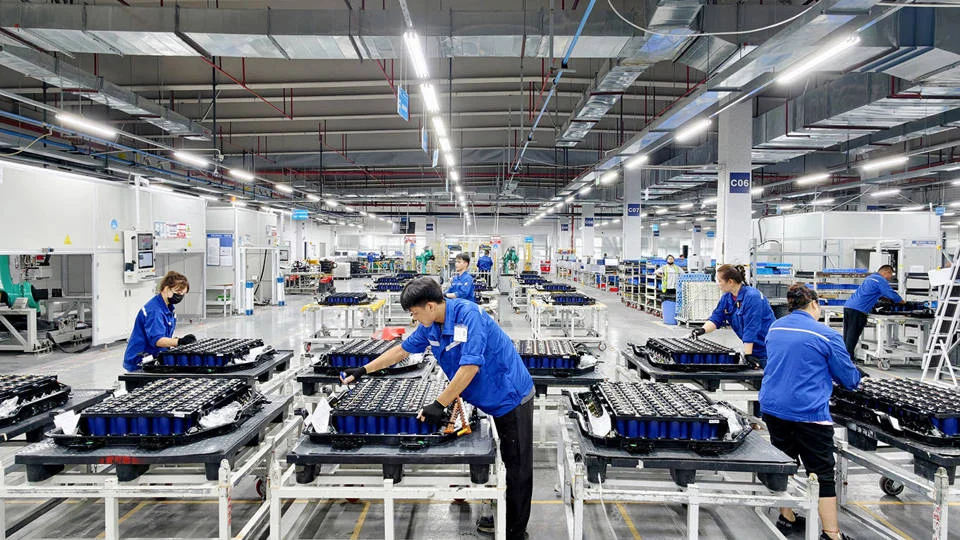
- 2021–Present: The Integration Phase. We are now witnessing the integration of digital infrastructure with physical manufacturing. China’s "Smart Factory" initiative has resulted in some of the most automated production lines in the world, reducing labor costs and improving quality control far beyond what simple subsidies could achieve.
Supporting Data: The Case for Efficiency
When we examine the cost structures of leading Chinese EV makers compared to their Western counterparts, the "subsidy" argument begins to fray.
- Vertical Integration: Companies like BYD control their entire supply chain, from raw mineral extraction to semiconductor production. This vertical integration allows for a degree of cost optimization that cannot be replicated by companies reliant on global, fragmented supply chains.
- The Talent Dividend: China currently produces more STEM graduates annually than the U.S. and Europe combined. This massive influx of engineering talent has created a "knowledge spillover" effect, where rapid prototyping—a hallmark of Chinese tech development—can happen at a pace that legacy automakers in the West find difficult to match.
- Domestic Competition Intensity: According to recent industry surveys, the Chinese EV market features over 100 active brands. This intense competition has forced companies to iterate on battery efficiency and software interfaces every 12 to 18 months, compared to the 3-to-5-year cycles common in legacy Western automotive firms.
Official Responses and Geopolitical Tensions
The rise of Chinese industrial dominance has inevitably triggered a defensive reaction from the West. The European Commission has initiated multiple anti-subsidy investigations into Chinese EVs, citing "unfair trade practices." Similarly, the U.S. Department of Commerce has expanded export controls, aiming to curb China’s access to high-end semiconductors necessary for AI development.
Beijing’s response has been characteristically strategic. Chinese officials argue that these trade barriers are a form of "protectionism masquerading as market fairness." In diplomatic forums, Beijing points to the global necessity of its green technologies. "If the world is to meet its climate goals," one Ministry of Commerce spokesperson noted, "the global supply of affordable, high-efficiency solar panels and batteries provided by Chinese firms is not an ‘unfair’ advantage, but a global public good."
However, this rhetoric hides the internal anxiety in Beijing. Chinese policymakers are well aware that their current growth model is hitting a demographic ceiling. The shift toward high-value-added manufacturing is a survival strategy, not just a growth strategy.
Implications for the Global Economy
The shift in the global industrial landscape carries profound implications for the next decade:
1. The End of the "Offshoring" Era
The era of offshoring production solely for labor cost arbitrage is over. The new imperative is "proximity and efficiency." Companies that cannot replicate the ecosystem-level integration seen in China—where suppliers, assemblers, and R&D centers are geographically clustered—will find it increasingly difficult to compete.
2. The Fragmentation of Standards
We are likely to see the emergence of a "bifurcated tech world." With different standards for AI, connectivity, and green energy, multinational firms may be forced to build two separate production and software stacks: one for the Chinese-influenced market and one for the Western-influenced market.
3. Rethinking "Industrial Policy"
The Western world is currently in a rush to adopt its own versions of industrial policy. The lesson from China’s experience is that subsidies alone will fail if they are not paired with a highly competitive domestic market. If Western governments provide subsidies to "national champions" without forcing those champions to compete for their survival, they risk creating bloated, inefficient entities that remain dependent on state funding for decades.
Conclusion: The New Competitive Reality
The narrative that China is merely "winning" due to state subsidies is a dangerous oversimplification. It blinds Western policymakers to the reality of China’s genuine technological and operational advancements. To effectively compete in this new landscape, advanced economies must look beyond the balance sheet of subsidies and recognize that the competition has shifted to the fundamental agility of the industrial ecosystem.
China’s emergence as a global leader is the result of a complex interplay of state-led strategic direction, an aggressive, Darwinian domestic market, and a massive investment in human capital. Whether the West chooses to confront this through protectionism or through its own structural renewal remains the defining question of the decade. One thing is certain: the era where advanced industries were the sole domain of the West is firmly in the rearview mirror. The future of manufacturing is being written in laboratories and factories where the speed of innovation, not just the cost of production, is the ultimate arbiter of success.