The Great Redistribution: Why Silicon Valley’s Elite Face a Reckoning

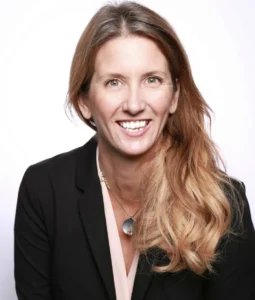
In the shadow of the Parthenon, amidst the hum of a vibrant tech festival in Athens this past May, Neil Rimer—a titan of venture capital and co-founder of Index Ventures—articulated a sentiment that is increasingly rattling the halls of power in Silicon Valley. Amidst discussions regarding the staggering, unprecedented wealth accumulating at the frontier of artificial intelligence, Rimer offered a blunt prognosis: "I have a strong sense that there will be some sort of a redistribution. It’ll either be voluntary or it’ll be involuntary, but it’ll happen, and I hope it’s voluntary."
For most, such rhetoric might be dismissed as garden-variety populism. Coming from Rimer, whose firm has been instrumental in the rise of companies like Figma and Wiz, the warning carried the weight of an insider’s ultimatum. As the tech industry faces a massive surge in capital—driven by the AI boom—the question of how that wealth will be socialized or taxed has moved from the periphery to the center of the political discourse.
The Chronology of an Evolving Moral Contract
To understand the urgency of Rimer’s warning, one must look at the historical trajectory of philanthropic engagement among the ultra-wealthy.
In 2010, the "Giving Pledge," championed by Warren Buffett and Bill Gates, represented the high-water mark of the voluntary model. It encouraged billionaires to commit at least half of their fortunes to charitable causes. For half a decade, it seemed as though the billionaire class had reached a consensus on their social responsibility.
However, the momentum has since stalled. In the first five years of the pledge, 113 families signed on. That figure dropped to 72, then 43, and by 2024, only four families joined the ranks. This decline is not merely a loss of interest; it represents a fundamental ideological shift. As Elon Musk, the world’s first trillionaire, has famously argued, many modern tech moguls believe their businesses are philanthropy—that the act of building, scaling, and innovating serves the public good more effectively than traditional charitable giving ever could.
This transition marks a departure from the "Gospel of Wealth" articulated by Andrew Carnegie in 1889. Carnegie argued that a rich man’s fortune was a trust for the public good and that it was a "disgrace to die wealthy." Today, the "trust" has been replaced by the "empire," where the preservation of capital for further investment is viewed as the ultimate moral duty.
Supporting Data: The Concentration of Capital
The statistical reality of the current wealth boom is sobering. In the third quarter of 2025, the share of wealth held by the top 1% of U.S. households hit 31.7%—the highest point since the Federal Reserve began tracking the data in 1989. While this remains below the Gilded Age peak of 1916 (estimated at 45%), the concentration among the "tippy top" is arguably more intense today.
Economist Gabriel Zucman has noted that during the height of the first Gilded Age, the four largest American fortunes represented roughly 4% of U.S. GDP. Today, the 19 wealthiest households in the country account for a staggering 14% of GDP.
The AI industry is the primary engine of this latest wave. Forbes’ 2026 billionaire rankings identified 45 new entrants from the AI sector alone, worth a combined $2.9 trillion. This total will likely balloon further once giants like OpenAI and Anthropic—both backed by firms like Index Ventures—complete their respective IPOs. Financial analysts have projected that the collective wealth of employees from these two companies alone could, upon their public debuts, enable them to purchase nearly one-third of all residential real estate in the San Francisco metropolitan area.
Official Responses and Political Maneuvers
As voluntary giving retreats, the "involuntary" path Rimer warned of is gaining legislative momentum.
In California, voters are facing a proposed 5% one-time wealth tax on billionaires. The prospect of this legislation has triggered a notable exodus; tech leaders, including Google’s Sergey Brin and Larry Page, have relocated their primary residences to Florida.
Corporate entities are also attempting to navigate this political volatility. OpenAI has reportedly held discussions regarding the possibility of granting the U.S. federal government a 5% equity stake. While CEO Sam Altman has framed this as a way to "share the upside of AI" with the American public, critics and political analysts view it as a tactical maneuver—a way to purchase political cover in Washington and stave off more aggressive regulatory or fiscal interventions.
This sentiment of skepticism toward government involvement remains deeply ingrained in the Valley. As Sequoia Capital’s Roelof Botha remarked, "Some of the most dangerous words in the world are: ‘I’m from the government, and I’m here to help.’" Yet, the history of the 1930s serves as a persistent counter-narrative. When Franklin D. Roosevelt enacted the "soak-the-rich" taxes to preempt the populist momentum of Huey Long’s "Share Our Wealth" program, he proved that when voluntary philanthropy fails to curb inequality, the state is rarely shy about filling the void.
Implications: The Moral Center of Tech
Rimer’s concern transcends simple tax policy; it speaks to a crisis of legitimacy. Reflecting on his time at Stanford in 1984, he recalls an era when founders like Steve Jobs were viewed as heroes—creators of tools that empowered individuals and enriched society. Today, he observes that his own children speak of major tech conglomerates in terms previously reserved for defense contractors or the tobacco industry.
This loss of "moral center" is perhaps the most significant implication of the current wealth gap. When the tech sector is viewed as a source of societal extraction rather than contribution, the social license to operate diminishes.
Rimer’s position is nuanced; he is a direct beneficiary of the very wealth he critiques. As an investor in companies like Anthropic, he stands to gain significantly from the outcomes he predicts will eventually be taxed or redistributed. However, his advocacy for "voluntary" redistribution suggests he believes that the industry’s survival depends on a fundamental shift in behavior.
If tech leaders choose to wait for the government to act, they may find themselves subject to the "hard way"—a legislative environment that prioritizes punitive measures over strategic investment. If they choose the "easy way," they have the opportunity to define a new model of stakeholder capitalism that mirrors the aspirations of the early Silicon Valley pioneers.
The path forward is no longer a matter of mere economic theory. It is a defining challenge for a generation of entrepreneurs who have achieved more power and capital than any group in human history. Whether they act as stewards of the public good or as architects of their own political undoing remains the most important question in modern business. As Rimer noted in Athens, history has a way of picking the path for those who refuse to pick one for themselves.