The Limits of Innovation: San Francisco Mayor Demands Regulatory Overhaul Following Robotaxi Gridlock
San Francisco Mayor Daniel Lurie, once a staunch advocate for positioning the city as the world’s premier "testbed for emerging tech," is signaling a paradigm shift in the city’s relationship with autonomous vehicles (AVs). While the administration remains committed to technological progress, recent logistical failures have forced a confrontation between municipal authorities and the rapidly expanding robotaxi industry.
Following a chaotic Independence Day celebration that saw thousands of residents trapped in a citywide traffic gridlock—exacerbated by a fleet of stalled Waymo vehicles—Mayor Lurie has formally petitioned state regulators to implement stricter, mandatory operational standards for autonomous fleets. This move marks a significant departure from the era of voluntary cooperation, as the city struggles to balance the convenience of AI-driven transit with the basic necessity of functional public infrastructure.
A Chronology of Chaos: When Technology Stalls
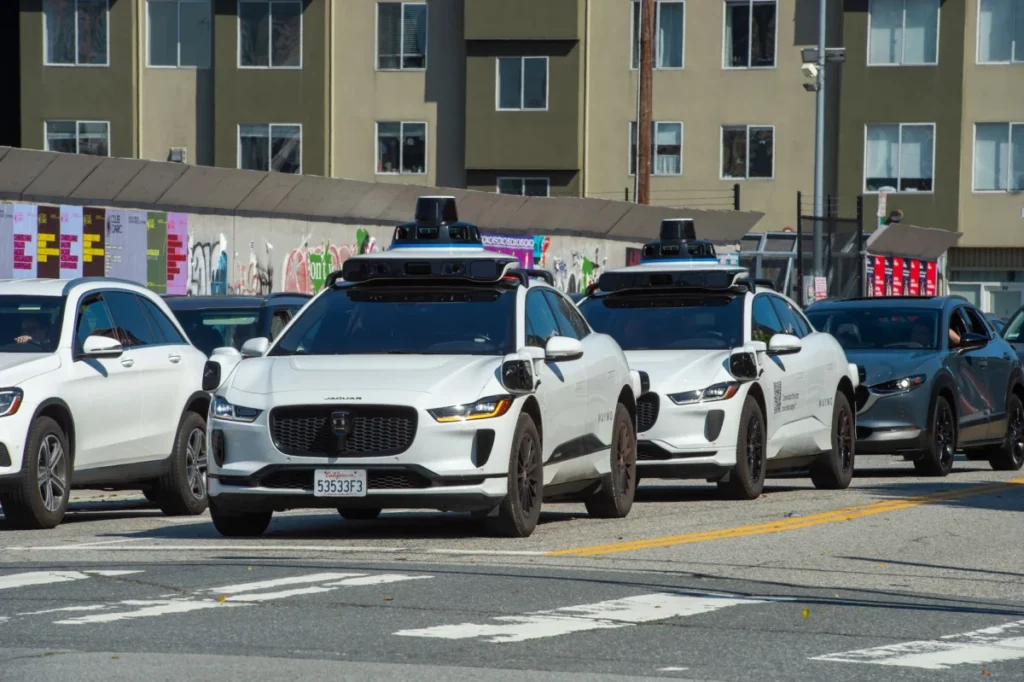
The catalyst for this regulatory push was the July 4 holiday, an event that drew approximately 100,000 spectators to the San Francisco waterfront. While the city anticipated heavy traffic, the situation was compounded by dozens of Waymo robotaxis that became immobile within the heavy congestion.
The July 4th Failure
As traffic intensified, numerous autonomous vehicles, struggling to navigate the extreme density of the crowd and the accompanying gridlock, essentially "gave up." Some ran out of power, while others simply ceased to move, creating physical barricades that blocked key traffic arteries. These stalled vehicles prevented municipal shuttles from moving, effectively paralyzing parts of the city’s transit network for hours.
Precedent for Concern
The July 4 incident was not an isolated anomaly but rather the tipping point of a growing trend. In his formal letter to the California Department of Transportation (Caltrans)—a document recently surfaced by the San Francisco Chronicle—Mayor Lurie highlighted a similar failure during a widespread power outage in December. In both instances, the autonomous fleets failed to maintain mobility, turning from high-tech transportation solutions into stationary obstacles that impeded emergency services and public movement.
The Regulatory Gap: Moving Beyond Voluntary Compliance
Currently, companies like Waymo, Zoox, and Nuro operate under a dual-permit system overseen by the California Department of Motor Vehicles (DMV) and the Public Utilities Commission (CPUC). While California’s regulatory framework is notably more rigorous than that of Texas or Arizona, Mayor Lurie argues that the current rules are designed for "normal conditions" rather than the realities of a bustling, high-density urban environment.
The Four Pillars of Operational Capability
In his letter to state regulators, Mayor Lurie outlined four "core operational capabilities" that he insists must become standard for any AV company seeking to operate in a dense metropolitan area:
- Immediate Extraction: Companies must demonstrate the ability to promptly remove or relocate robotaxis from active travel lanes during a crisis to prevent the "dead-stop" effect.
- Dynamic Adaptability: Fleets must be capable of real-time route adjustments, including the ability to shift service areas or modify pickup and drop-off points in response to sudden infrastructure changes.
- Data Transparency: Operators must provide local agencies with real-time operational data, including alerts for service disruptions, the precise location of immobile vehicles, and active recovery efforts.
- Stress Testing: Companies must prove, through simulation and rigorous real-world testing, that their software can manage massive influxes of pedestrian and vehicle traffic without defaulting to a "fail-safe" state that blocks public transit.
Lurie’s contention is that these measures will not stifle innovation, but rather serve as a necessary evolutionary step. "These requirements will not undermine autonomous vehicles; they will strengthen them," Lurie wrote, emphasizing that the maturity of the technology must now match the scale of its deployment.
The Data: Scaling the Robotaxi Frontier
San Francisco has long served as the crucible for autonomous driving, with six major companies holding driverless testing permits. However, the commercial reality of these fleets has far outpaced the initial experimental phase.
Waymo, the undisputed leader in the local market, currently operates an estimated 1,000 robotaxis within the Bay Area. The company claims to complete more than 500,000 paid rides every single week across its 11 active U.S. cities. This rapid scaling has fundamentally altered the city’s traffic composition.
A Diverse Competitive Landscape
While Waymo currently holds the largest market share, the ecosystem is diversifying:
- Zoox: An Amazon-owned venture that has been aggressive in its testing and deployment strategies.
- Uber: Recently announced plans to launch a premium robotaxi service in San Francisco, further complicating the density of AVs on the streets.
- Tesla: While Tesla operates a branded robotaxi service, it notably avoids the "driverless" label for its current fleet. Utilizing a charter transportation permit, Tesla uses human-driven vehicles equipped with advanced driver-assistance systems, bypassing the specific regulatory hurdles faced by fully autonomous operators.
Official Responses and Industry Tensions
The tension between the city and industry leaders is reaching a fever pitch. On July 4, Waymo had voluntarily agreed to restrict service in certain zones and even provided a representative to the city’s emergency operations center. Despite these efforts, the sheer scale of the fleet meant that vehicles outside the designated restriction zones still contributed to the gridlock.
Lurie’s position is clear: voluntary cooperation is no longer a viable substitute for enforceable, universal regulations. "The events demonstrated that California’s current regulatory framework does not adequately address how autonomous vehicles operate during major incidents, planned or not," the Mayor stated. "California’s challenge now is not just whether autonomous vehicles can operate safely under normal conditions, but also whether they can perform reliably during extraordinary ones."
Waymo has yet to provide a detailed response to the specific criticisms posed by the Mayor’s office. As of press time, the company continues to maintain that its safety record is superior to that of human drivers, though critics argue that "safety" must be defined by more than just accident rates—it must also include the reliability of the urban transit network.
Implications for the Future of Urban Transit
The conflict in San Francisco is a bellwether for every major city considering the integration of autonomous fleets. If the birthplace of the robotaxi movement can no longer sustain the "move fast and break things" philosophy, it is unlikely that other global cities will permit such latitude.
A Path Toward "Infrastructure-Aware" AI
The push for "infrastructure-aware" autonomous systems suggests that the next phase of AV development will focus less on the "wow factor" of driverless operation and more on the logistics of integration. For companies like Waymo, this means integrating their software with municipal traffic management systems. For regulators, it means shifting from a reactive approach to a proactive, performance-based mandate.
Should California adopt Lurie’s four pillars, it would establish a high-water mark for AV regulation that would likely be mirrored in other major transit hubs. The industry, currently enjoying a period of expansion, now faces a critical inflection point: conform to the infrastructure requirements of the cities they inhabit, or risk the imposition of severe, potentially growth-limiting, operational restrictions.
The goal, as articulated by the Mayor’s office, is not to ban the technology, but to ensure that the robotaxi of tomorrow is a responsible citizen of the road. As San Francisco continues to serve as the premier laboratory for this technology, the outcome of this dispute will undoubtedly define the standard for autonomous transit for the next decade.
Kirsten Korosec is the Transportation Editor at TechCrunch, covering the evolution of mobility, urban planning, and autonomous systems for over a decade.