The Architecture of Obsession: Why Putin’s War Has Become Russia’s Only Reality
By Nina L. Khrushcheva
July 13, 2026
In the corridors of the Kremlin, the echoes of Soviet history are not merely ghosts; they are the blueprints for contemporary governance. As Russia navigates the third year of a grinding, attritional war in Ukraine, the state has ceased to be a functioning bureaucracy in the traditional sense. Instead, it has morphed into a monolithic engine of conflict. From the relentless, nerve-jangling frequency of Ukrainian drone strikes deep within Russian territory to the suffocating grip of soaring inflation and chronic fuel shortages, the "special military operation" has exacted a price that few analysts could have predicted in February 2022. Yet, for Vladimir Putin, this war is no longer a strategic choice—it is the very oxygen upon which his regime survives.
The Ideological Roots of Perpetual Conflict
Karl Marx once famously wrote that theory becomes a material force the moment it grips the masses. Throughout the 20th century, Soviet leaders treated this assertion as an absolute truth, often with catastrophic consequences. Vladimir Lenin weaponized the concept to justify the chaos of the Bolshevik Revolution, while Joseph Stalin utilized it as a moral license to condemn millions to starvation and forced labor in his ruthless pursuit of industrialization.
Today, Putin has updated this tradition. He has replaced the Marxist-Leninist dream of a global proletarian utopia with a reactionary, neo-imperial nationalism. In the Kremlin’s current worldview, history is not a process to be understood, but a battlefield to be reconquered. By tethering the Russian state’s survival to the necessity of permanent struggle against an "encircling West," Putin has effectively painted himself into a corner where peace is not merely difficult—it is an existential threat to his authority.
Chronology of a Descent: From Special Operation to Total War
The trajectory of the current conflict can be mapped through the progressive radicalization of the Russian state apparatus:
- February 2022: The launch of the "Special Military Operation," initially framed as a short-term, surgical strike intended to neutralize Ukrainian leadership and "denazify" the country.
- September 2022: The declaration of "partial mobilization," marking the first time the state formally acknowledged the human cost of the conflict to the Russian citizenry.
- 2023: The shift toward a full-blown war economy. Military spending skyrocketed, effectively subsidizing the industrial sector at the expense of social programs and civil infrastructure.
- 2024: The normalization of the "frontline state." The internal security apparatus was expanded to root out dissent, with the war becoming the central pillar of the education system, media, and public life.
- 2025–2026: The onset of structural decay. Despite the veneer of economic resilience, the cumulative effects of sanctions, labor shortages, and technological isolation began to manifest in daily life: hyper-inflation, crumbling civil aviation, and energy instability.
Supporting Data: The Economic Toll of Isolation
While the Kremlin’s propaganda machine continues to broadcast figures of "resilient growth," the lived experience of the average Russian tells a different story. The data reveals a state under immense, self-imposed strain.
The Inflationary Spiral
Consumer prices have surged, driven by a combination of massive state military spending and the scarcity of imported high-tech components. The central bank’s interest rate hikes have done little to dampen the inflationary fire, as the state continues to pump liquidity into the military-industrial complex, creating a two-tier economy: a booming defense sector and a stagnant, inflationary civilian market.
Labor Shortages and Demographics
The war has exacerbated Russia’s pre-existing demographic crisis. Hundreds of thousands of working-age men have either been killed, wounded, or have fled the country to avoid conscription. This "brain drain" and "brawn drain" have left the manufacturing and agricultural sectors desperate for personnel, forcing the government to rely on elderly workers and increasingly strained prison labor.
The Drone Effect
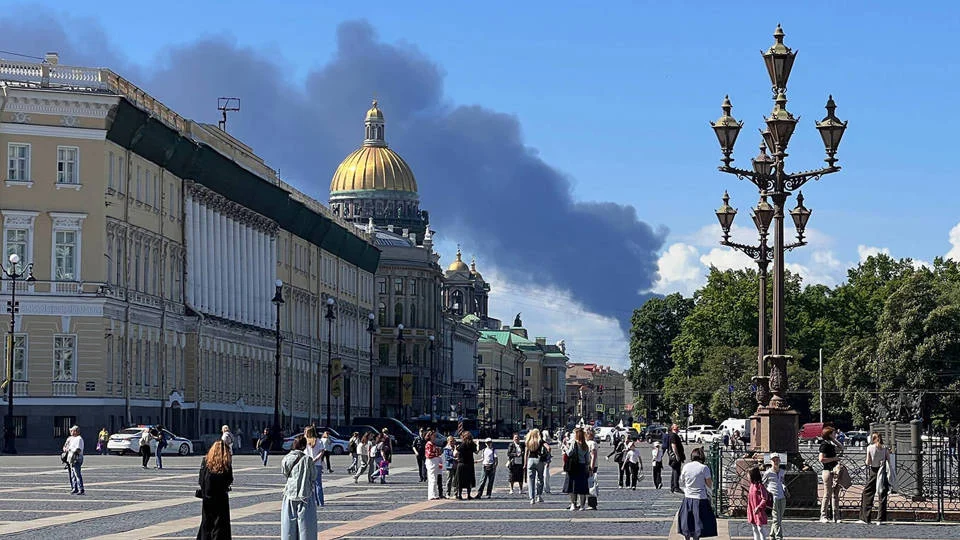
The psychological and material impact of Ukrainian drone strikes on Russian refineries and infrastructure cannot be overstated. Beyond the immediate economic loss, these strikes have shattered the illusion of a "safe" hinterland. They have forced the Russian military to divert air defense systems from the frontline to protect domestic oil facilities, creating a tactical paradox: the more Putin tries to protect his economy, the less capable he is of sustaining his military offensive.
Official Responses: The Fortress Mentality
The Kremlin’s response to these mounting pressures has been to double down. In official rhetoric, the shortages are framed as "necessary sacrifices" for national sovereignty. State-controlled media outlets have successfully cultivated a narrative of "besieged fortress" politics, where any economic hardship is attributed to the "hostile actions of the collective West."
By framing the war as a fight for survival against NATO, the regime has effectively criminalized moderate dissent. Anyone advocating for peace negotiations is immediately labeled a "foreign agent" or a traitor. This has created a feedback loop: the government ignores the signals of public discontent, leading to even more radical policy decisions, which in turn generate more discontent.
Implications: The Path to Nowhere
The fundamental tragedy of the current Russian state is that it has stripped away all other paths to legitimacy. By making the war the organizing principle of his regime, Putin has ensured that any retreat—any admission that the war was a mistake—would be viewed as an invitation for his own downfall.
The Absence of Political Transformation
Lasting peace requires more than a ceasefire; it requires a structural overhaul of the Russian political system. The current regime is incapable of such a shift because its power rests on the continuity of the conflict. The bureaucracy is filled with individuals whose careers, wealth, and status are directly tied to the continuation of the war effort. A transition to a peacetime economy would necessitate the dismantling of the very power structures that currently keep the Kremlin afloat.
Global Geopolitical Consequences
The longer this war continues, the more Russia becomes a junior partner to Beijing, trading its geopolitical autonomy for short-term economic survival. This shift has profound implications for global stability, as Russia’s reliance on authoritarian allies creates a bloc explicitly designed to challenge the international order.
The Future of the Russian State
The "bright future" promised by the Kremlin is, much like the Soviet ideals of the past, a mirage. The material force of the war is currently gripping the Russian masses, but the foundation of this force is sand. Eventually, the discrepancy between the Kremlin’s narrative and the harsh reality of empty shelves, falling currency, and endless funeral processions will become impossible to reconcile.
However, until that breaking point is reached, the regime will likely continue to lurch forward, driven by the inertia of its own obsession. History suggests that when a state replaces governance with ideology, the end is rarely a matter of policy—it is a matter of collapse. For Russia, the path back to normalcy will not be found in the current halls of power; it will require a fundamental political transformation that the present architecture of the Kremlin is designed to prevent at all costs.
In the final analysis, the war is no longer something Russia is doing; it is something Russia has become. And as long as that remains true, the shadows of the past will continue to dictate a future of diminishing returns and deepening tragedy.