The Robotaxi Frontier: Uber and Waymo’s Regulatory Collision in D.C.
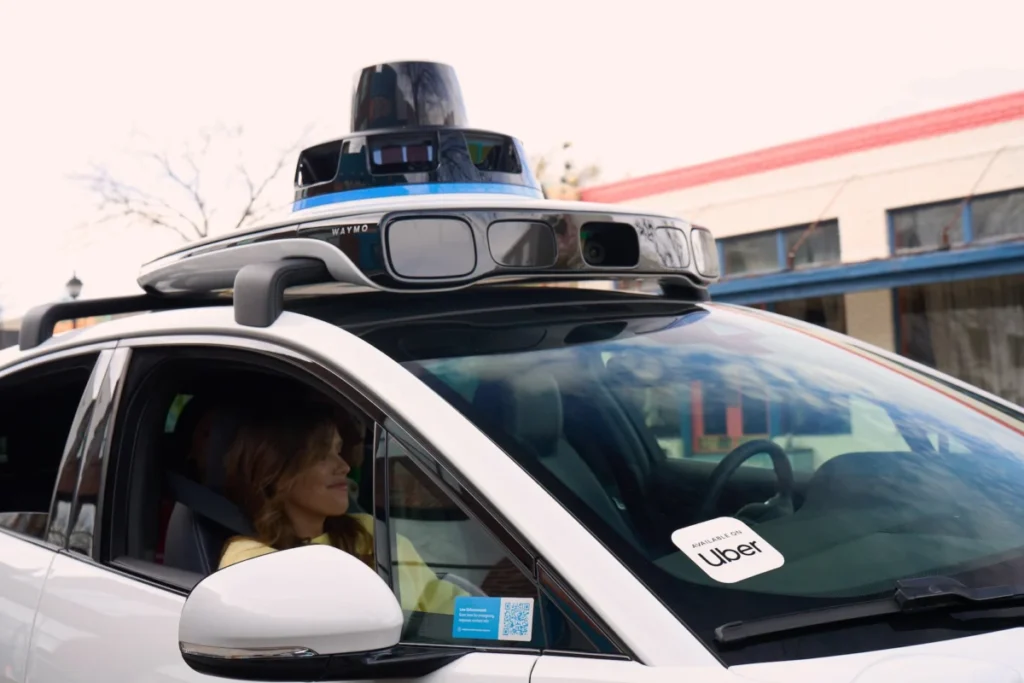
A high-stakes battle is brewing in the halls of Washington, D.C.’s municipal government, transforming the nation’s capital into a crucible for the future of autonomous vehicle (AV) regulation. At the heart of the conflict is a proposed piece of legislation that would authorize the commercial deployment of driverless robotaxis—a move that has pitted two former courtroom rivals, Uber and Waymo, against one another in a fight that could redefine how autonomous technology integrates into the American urban landscape.
The proposed Autonomous Vehicle Act, introduced by Councilmember Charles Allen in May, aims to modernize the city’s 2012 framework, which currently restricts driverless operations to testing with a human safety operator present. If passed, the new bill would empower the District Department of Transportation (DDOT) to issue commercial deployment permits, potentially paving the way for fleets of robotaxis to roam D.C. streets. However, while Waymo and other AV developers view this as a necessary step toward progress, Uber has emerged as a vocal opponent, arguing that the bill in its current form threatens to create a "de facto monopoly" and jeopardize the livelihoods of human ride-hailing drivers.
The Core Conflict: Hybrid Networks vs. AV-Only Models
The legislative standoff hinges on a fundamental disagreement regarding the structure of the future transportation market. Waymo, the Alphabet-owned autonomous pioneer, supports the current bill, viewing it as a balanced approach that promotes safety and equity. Uber, conversely, is lobbying for a "hybrid" regulatory framework.
Uber’s vision is one of forced integration. The company contends that regulators should mandate that any autonomous fleet operating in a city must function within a broader, multi-modal network that also utilizes human-driven vehicles. According to Javi Correoso, who oversees U.S. policy and federal affairs for Uber, a "first-party only" regulatory approach—where an AV developer operates its own isolated fleet—risks creating urban congestion, exacerbating transit inequality, and displacing thousands of human jobs.
"We have already seen in other jurisdictions how a flawed, first-party only regulatory approach can disrupt a city," Correoso stated during a recent D.C. Council roundtable. He cited data suggesting that a single AV can displace roughly four human drivers, arguing that robotaxis, when left to operate independently, are prone to idling, cruising empty, and failing to provide the nuanced physical assistance that human drivers offer to elderly or disabled passengers.
For Uber, the regulatory solution is clear: "Consumers should have the ability to access both. If a consumer is on the app, they should be able to choose," Correoso argued. "I would go a step further: I think it should be part of the regulatory framework for the industry. There should be a requirement for consumers to be able to take an Uber that’s driven by a human."

Chronology of a Corporate Rivalry
The friction between Uber and Waymo is as complex as the technology they seek to deploy. Their history is marked by a dramatic arc from bitter litigation to uneasy partnership, and now, to renewed antagonism.
- 2017: The Trade Secret War: The companies were locked in a landmark legal battle after Waymo sued Uber, alleging that the ride-hailing giant had misappropriated proprietary trade secrets—specifically regarding LiDAR technology—via former Google engineer Anthony Levandowski. The trial featured sensational testimony and ended with an out-of-court settlement.
- 2020: The Pivot: Following the sale of its in-house self-driving unit (Uber ATG) to Aurora, Uber shifted its strategy from developer to aggregator.
- 2023: The Phoenix Pilot: In a move that signaled a truce, Waymo agreed to integrate its robotaxis into the Uber app in Phoenix, Arizona. This allowed Uber to offer autonomous rides without having to build the underlying technology.
- 2025: The SXSW Launch: At the SXSW festival in Austin, Texas, executives from both companies celebrated the expansion of their partnership. The mood, fueled by celebratory drinks and mutual praise, masked growing underlying tensions.
- Mid-2025 to Present: The relationship began to fracture publicly. Uber’s CTO, Praveen Neppalli, openly criticized Waymo’s vehicle behavior on social media, while Uber CEO Dara Khosrowshahi used earnings calls to emphasize the necessity of stricter municipal oversight on AVs. By May 2026, the two companies had quietly parted ways in Phoenix, signaling the end of their once-promising collaboration.
Regulatory Mechanics: The Proposed D.C. Bill
The proposed bill, B26-0684, serves as the primary battleground. Beyond simply legalizing driverless cars, it introduces several administrative hurdles that have drawn both praise and criticism from various corners of the tech and labor sectors.
Key Provisions:
- Permitting Authority: DDOT would gain the power to issue specific testing and deployment permits, contingent upon rigorous safety reporting requirements.
- Insurance and Data: Developers would be required to hold a minimum of $5 million in liability insurance. Furthermore, strict data-sharing mandates require companies to report crashes within 8 to 72 hours, depending on whether the vehicle is commercial or private.
- The VMT Tax: Perhaps the most controversial aspect is the proposed $0.15 per mile "Vehicle Miles Traveled" (VMT) tax. The bill proposes splitting the revenue: 50% for public transit and 50% for workforce development to assist human drivers displaced by automation.
Critics of the bill, including some industry advocates, argue that the VMT tax is punitive and represents a "regulatory capture" attempt to extract rent from innovators. Greg Rogers, director of The Innovation Majority, argues that forcing a specific business model through regulation will stifle competition and fail to address actual road safety. "Any argument that you can improve consumer welfare by forcing certain business models and canceling out others does not improve people’s mobility choices," Rogers noted.
Implications for the Future of Work
The debate in Washington, D.C. is a microcosm of a global trend. As AV technology matures, labor organizations—including the Teamsters and the Service Employees International Union—have joined the fray, raising concerns about the erosion of the gig-economy workforce.
Uber, despite its history of fighting for the independence of its contractors, is now pivoting to a "pro-labor" posture. By championing a hybrid network, the company is attempting to position itself as the responsible middle ground, acknowledging that the "grow-at-all-costs" mentality of the past caused long-term reputational damage. As COO Andrew MacDonald noted in a recent LinkedIn post, the company’s past regulatory battles have "changed us." The new strategy is to partner with cities rather than confront them, ensuring that human drivers remain a permanent fixture of the urban transportation fabric.
However, skeptics argue that this pivot is less about benevolence and more about market protection. By requiring AVs to operate on a network like Uber’s, the company effectively ensures it remains the "gatekeeper" of the transportation market, forcing developers like Waymo to concede a portion of their margins and, perhaps more importantly, their user data.

A Looming National Precedent
The upcoming hearing in D.C. is expected to be a marathon of testimony from stakeholders ranging from disability rights advocates—who argue that human drivers are essential for accessibility—to tech lobbyists and city officials.
While the passage of the bill is not considered imminent, the legislative effort reflects a shift in the political wind. Municipalities are no longer willing to allow tech companies to dictate the terms of deployment. They are demanding safety data, tax contributions, and, in some cases, the preservation of human employment.
If D.C. successfully implements a regulatory framework that mandates hybrid networks or imposes significant VMT taxes, it could set a template for other major cities currently struggling with the "robotaxi dilemma." For Waymo, the goal is to maintain the freedom to scale its standalone app and service. For Uber, the goal is to ensure that the transition to autonomy happens on their terms—and within their app.
As the industry prepares for the hearing, one thing is certain: the era of the "move fast and break things" approach to autonomous vehicles is officially over. The future of the robotaxi will be decided not just by lidar sensors and machine learning algorithms, but by the slow, grinding machinery of municipal legislation and the competing interests of two of the most powerful companies in the tech world.