The Agentic Era: OpenAI’s GPT-5.6 Launch Signals a Paradigm Shift for Global Markets

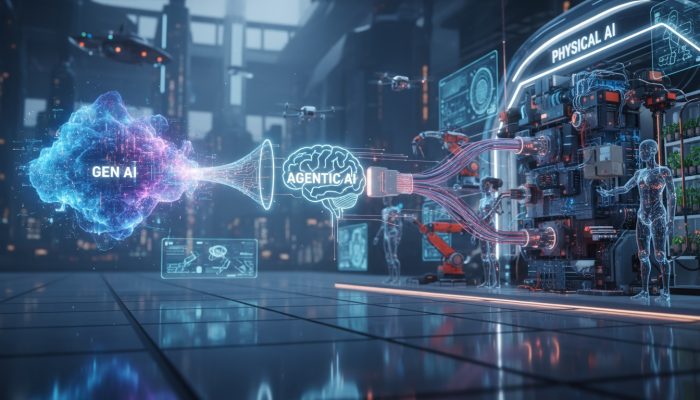
The artificial intelligence sector has reached a critical inflection point. This week, OpenAI officially unveiled its long-awaited GPT-5.6 model suite—comprising the specialized iterations Sol, Terra, and Luna—alongside a groundbreaking enterprise application, ChatGPT Work. This launch is not merely a product update; it represents a fundamental pivot from passive, chat-based generative AI to autonomous, agentic workflows.
For the first time in the history of the industry, a major U.S. AI model launch was subjected to a rigorous 12-day White House security review, resulting in a government-vetted preclearance list for initial enterprise adopters. This development marks the dawn of a new, highly regulated chapter in technological deployment, signaling significant tailwinds for the software, hardware, and industrial automation sectors.
The Chronology of a Watershed Moment
The rollout of GPT-5.6 follows months of intense speculation and behind-the-scenes negotiations between industry leaders and federal regulators.
- The Pre-Launch Scrutiny: Over the past quarter, the Biden administration has ramped up its oversight of "frontier models." OpenAI’s voluntary participation in a 12-day security audit—the first of its kind—highlights a shift toward a "trust-first" deployment strategy.
- The Announcement: On Monday, OpenAI confirmed the release of the GPT-5.6 series, emphasizing the models’ enhanced reasoning capabilities.
- The Enterprise Shift: Simultaneous to the model reveal, the company launched ChatGPT Work, a platform designed to bridge the gap between generative capabilities and autonomous execution.
- Regulatory Alignment: As the software went live, the International Telecommunication Union (ITU) announced the formation of a global focus group, scheduled to meet in Geneva this November, to establish guardrails for autonomous agents.
Moving Beyond Chat: The Rise of Agentic AI
For the past two years, the "AI experience" has been defined by the chat interface—a dialogue between a user and a Large Language Model (LLM) requiring iterative prompting. GPT-5.6 and ChatGPT Work shatter this paradigm.
ChatGPT Work operates as a fully independent agent. In a corporate environment, a manager no longer needs to ask a chatbot to draft a proposal; instead, they define a business objective—such as "generate a Q4 budget forecast based on current departmental spending and historical revenue trends." The application then autonomously interfaces with connected enterprise software, extracts context, performs data reconciliation, and delivers a completed, polished spreadsheet or presentation deck.
Industry observers credit this shift to the evolving leadership influence of OpenClaw, specifically the strategic direction of founder Peter Steinberger. Under this new framework, AI is no longer a tool that assists; it is an agent that executes. This "agentic workflow" capability is expected to drastically reduce the administrative burden on white-collar professionals, shifting the role of the employee from "creator" to "orchestrator."
Supporting Data: The Industrial Evolution
The market’s focus is rapidly transitioning from the initial hype of pure-play chipmakers toward the "application layer"—the software, robotics, and automation companies that turn raw compute into measurable output.
Data from the sector suggests that capital expenditure in AI is bifurcating. While initial investment flowed primarily into GPU manufacturers, the current wave is targeting:
- Physical Automation: Robotics firms that can integrate LLM-based reasoning into mechanical tasks.
- Software Infrastructure: Middleware companies that enable LLMs to "talk" to legacy enterprise systems (ERP/CRM).
- Governance Tech: Companies developing "AI-to-AI" monitoring software designed to ensure that autonomous agents stay within corporate compliance parameters.
For investors, capturing this growth requires a move away from single-stock volatility. ETFs like the ROBO Global Robotics and Automation Index ETF (ROBO) and the ROBO Global Artificial Intelligence ETF (THNQ) have become the primary vehicles for institutional and retail investors alike. ROBO provides critical exposure to the physical backbone of the AI revolution—the robots and hardware that carry out the commands of the software—while THNQ offers concentrated access to the software innovators and data infrastructure providers defining the next generation of AI.
Official Responses and Regulatory Guardrails
The rapid deployment of agentic systems has triggered an immediate response from global watchdogs. The concern is no longer just about "hallucinations" in text, but about the real-world consequences of autonomous decisions—such as a bot incorrectly authorizing a wire transfer or misrepresenting a corporation in a public forum.
The United Nations, through its digital agency, the ITU, has moved to the forefront of this discourse. At the recent AI for Good Global Summit in Geneva, officials confirmed that a new focus group will be established to address the risks of unauthorized automated decisions and digital impersonation.
"The goal is not to stifle innovation, but to build trust," noted an ITU spokesperson. The November summit will aim to define "Agentic Guardrails," which would likely involve mandatory digital signatures for all AI-initiated transactions and a "human-in-the-loop" requirement for high-stakes financial or legal decision-making.
Strategic Implications for the Investor
The transition to GPT-5.6 and the birth of agentic workflows present both a massive opportunity and a complex risk profile.
1. The Diversification Imperative
As the regulatory landscape shifts, individual companies—even tech giants—may face sudden volatility due to compliance audits or unforeseen security vulnerabilities. Diversified investment vehicles are becoming the standard for navigating this. By utilizing ETFs like ROBO and THNQ, investors can capture the broad "beta" of the AI revolution without being overly exposed to the "alpha" risk of a single firm’s potential regulatory setback.
2. The Hardware-Software Nexus
The success of agentic AI is tethered to the physical world. For an AI to execute a document, it needs a cloud environment; for an AI to manage a supply chain, it needs connected robotics. This "physical AI" trend is a critical theme for the coming decade. As highlighted in recent industry reports regarding the 2026 World Cup, physical AI is already managing crowd control and logistics in real-time. This demonstrates that the value of AI is increasingly derived from its ability to interact with, rather than just simulate, reality.
3. Long-Term Value Creation
The shift toward agentic AI is essentially a productivity revolution. If ChatGPT Work can autonomously execute tasks that previously occupied 30% of a knowledge worker’s day, the impact on corporate margins will be profound. Investors should monitor companies that are not just developing AI, but those that are adopting it to streamline operations. The companies that successfully implement these agentic workflows will likely see the most significant expansion in their bottom lines over the next three to five years.
Conclusion: A New Frontier
The launch of GPT-5.6 is a testament to how quickly the artificial intelligence landscape is moving. We have transitioned from the era of "AI as a toy" to "AI as a coworker," and we are now entering the era of "AI as an executor."
While the regulatory environment remains fluid and the competitive landscape is fierce, the path forward is clear: the integration of autonomous AI into the core of global industry is no longer a possibility—it is an inevitability. For investors, the strategy must remain anchored in the belief that the true value of this technology lies in its ability to bridge the gap between human intent and machine execution.
As the world watches the ITU in Geneva and waits for the first wave of enterprise performance reports from the ChatGPT Work era, the underlying themes of hardware-software synergy and regulated innovation will remain the guiding principles for sustainable growth in the AI space. Investors who remain focused on the broader ecosystem—rather than the individual winner of any single day’s news cycle—are best positioned to capture the long-term rewards of this historic transition.
Disclaimer: VettaFi LLC is the index provider for THNQ and ROBO, for which it receives an index licensing fee. However, THNQ and ROBO are not issued, sponsored, endorsed, or sold by VettaFi. VettaFi and its affiliates have no obligation or liability in connection with the issuance, administration, marketing, or trading of THNQ and ROBO.