A New Chapter: Nandan Nilekani Steps Back as Fundamentum Launches $200M Third Fund
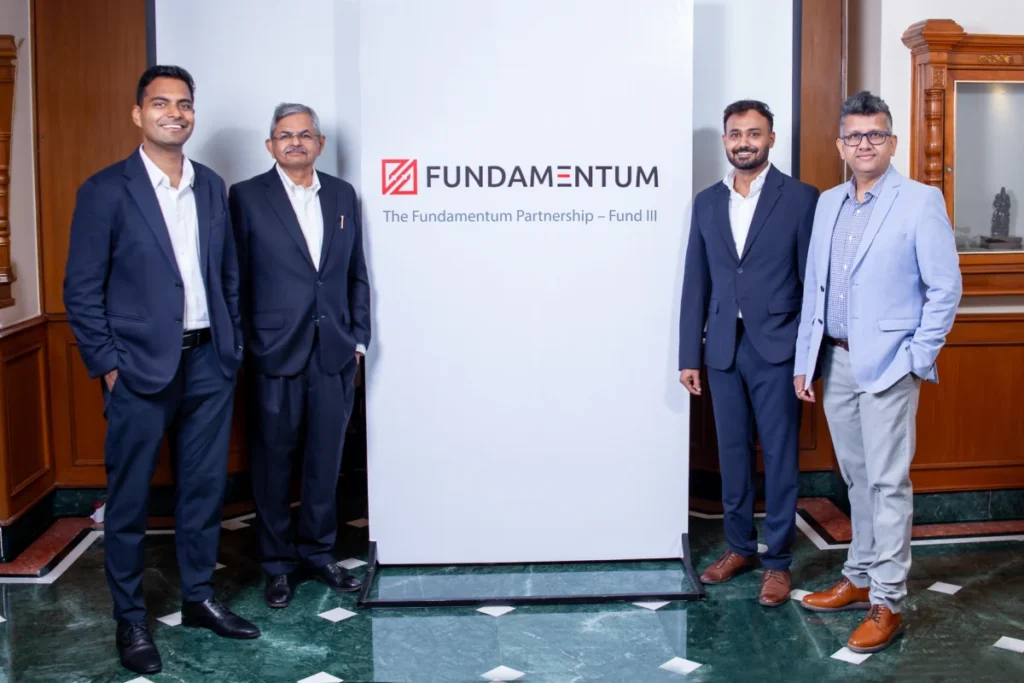
In a significant transition for India’s venture capital landscape, Nandan Nilekani—the legendary co-founder of Infosys and a titan of India’s digital infrastructure—is stepping down from his role as a general partner at Fundamentum Partnership. The move comes as the firm, which he co-founded nearly a decade ago, embarks on the launch of its third fund, targeting a corpus of $200 million.
While the change marks a formal departure from the day-to-day management of the firm, Nilekani remains deeply embedded in the Fundamentum ecosystem. He will serve as the anchor investor for the new fund and will continue to provide strategic counsel and mentorship to the founders within the firm’s portfolio.
The Evolution of a Visionary Partnership
The partnership between Nandan Nilekani and Sanjeev Aggarwal, the former co-founder of Helion Venture Partners, began in 2017 with a singular mission: to provide patient, growth-stage capital to India’s most promising startups. Since its inception, Fundamentum has carved out a unique niche by focusing on Series B and later-stage companies, helping them scale in a market that has historically been volatile.
The firm’s portfolio is a testament to its thesis, featuring high-growth entities such as the used-car marketplace Spinny, the online pharmacy giant PharmEasy, the innovative audio storytelling platform Kuku FM, and AppsForBharat, the creator of the popular Sri Mandir devotional app.
A Strategic Pivot or a Natural Progression?
Sanjeev Aggarwal characterizes the leadership shift as a "title change" rather than a fundamental break in relationship. "Nandan is an integral part of our firm," Aggarwal explained in an interview. "The one thing that he enjoys the most is mentoring the teams that we back, and he will continue to do so in Fund III."
Nilekani, at 71, occupies a unique position in the Indian technology sector. Beyond his corporate success with Infosys, he is widely regarded as the "architect of modern digital India." His work in spearheading Aadhaar—the world’s largest biometric identity system—and his advocacy for the Unified Payments Interface (UPI) and the Open Network for Digital Commerce (ONDC) have fundamentally transformed the Indian economy. His transition at Fundamentum allows him to retain his influence as a mentor while delegating the administrative and investment-heavy responsibilities of a general partner to a younger, more focused leadership team.
Strengthening the Investment Bench
The launch of Fund III brings with it a broadening of the senior investment team at Fundamentum. While Aggarwal continues to steer the ship, the new fund will be powered by a team that has been groomed within the firm’s walls.
Prateek Jain, who joined at the inception of the firm in 2017, assumes a larger role, alongside Mayank Kachhwaha, a seasoned fintech investor who joined ahead of Fund II. The firm’s operations are further bolstered by finance chief Sanjay Chaturvedi, who has been a constant presence for nearly a decade. This restructuring signals a deliberate move toward institutionalizing the firm beyond its founding names, ensuring longevity and continuity as they target a fresh $200 million deployment.
The Strategy for Fund III: AI and Consumer Tech
Fundamentum’s third fund is setting its sights on eight to 10 high-potential, early-to-growth-stage startups. The firm plans to issue initial checks in the neighborhood of ₹100 crore (approximately $10.5 million) per investment.
Betting on the Application Layer
A core pillar of the firm’s strategy for the next cycle is the belief that India’s greatest AI opportunity does not lie in the creation of foundational large language models (LLMs)—a domain dominated by massive capital expenditures in the U.S. and China—but in the "application layer."
Aggarwal and his team are scouting for ventures that leverage existing global AI models to solve specific problems in Indian contexts. These include innovations in financial services, content creation, and vernacular consumer applications. This focus underscores a broader trend in India’s venture ecosystem: a shift toward practical, utility-driven AI implementation that can be scaled across India’s diverse and massive demographic.

The Shifting Sands of Domestic Capital
The fundraising for Fund III is expected to take place over the next 12 to 18 months, with the firm already beginning to deploy capital. Notably, the structure of the fund’s limited partners (LPs) reflects a decade-long evolution in India’s financial maturity.
Aggarwal notes that in the mid-2000s, when he was building Helion, the concept of "domestic capital" for venture funds was virtually non-existent. "All the capital was raised from the U.S.," he recalls. Today, the landscape is starkly different. Fundamentum expects to raise roughly half of its target from international investors, with the remainder coming from Indian family offices, institutional investors, and startup founders.
This maturation of the Indian LP base is a critical milestone. It indicates that the wealth generated by the first generation of Indian tech successes is now being recycled back into the ecosystem, creating a virtuous cycle of domestic venture funding.
Contextualizing the Departure of Ashish Kumar
The leadership reshuffle also follows the high-profile departure of former general partner Ashish Kumar. Kumar recently launched a separate, AI-focused venture fund dubbed "Fundamentum Frontier Advisors" (F2A), with a corpus of ₹3,000 crore.
While Nilekani is an anchor investor in F2A, the firms remain operationally distinct. Aggarwal confirmed that there is no formal connection between the two entities, and Kumar has no involvement in the operations or strategy of Fundamentum’s Fund III. This divergence allows the two teams to pursue different risk profiles and investment theses, with F2A focusing on the frontier of AI research and deployment, while Fundamentum continues its established path of backing scaling consumer and fintech players.
Implications for the Indian Startup Ecosystem
Fundamentum’s transition is emblematic of a maturing venture capital market in India. By formalizing the roles of younger partners and shifting the founder’s role toward strategic mentorship, the firm is preparing for a future that is less dependent on individual "celebrity" investors and more reliant on institutionalized processes and collective expertise.
Performance and Accountability
The firm’s track record provides a solid foundation for this transition. Having made 17 investments across its first two funds, Fundamentum has demonstrated an ability to pick winners in a competitive market. Furthermore, the firm has already returned approximately half of the capital from its first fund to investors, a metric of success that is often overlooked in the hype-driven world of venture capital.
As the firm moves into its third iteration, the "Nilekani legacy" remains a powerful draw. His involvement as an anchor investor—and his commitment to mentoring—serves as a seal of approval for the startups in the portfolio, providing them with access to the highest echelons of strategic thought and governance in India.
Conclusion
The departure of Nandan Nilekani from the general partner role is not an exit, but a transformation of his contribution. In a landscape that is increasingly defined by AI-driven disruption and the maturation of domestic capital, Fundamentum is positioning itself for a new era of growth.
With $200 million in the crosshairs, a refreshed leadership team, and a clear-eyed focus on the application layer of AI, the firm is signaling that it is ready to support the next decade of Indian innovation. For the startups in the Fundamentum orbit, the continued presence of a mentor as experienced and visionary as Nilekani remains their greatest asset, even as the firm evolves to meet the challenges of an increasingly complex global economy.