The Perfecters of Our Union: A New Declaration for America at 250
As the United States reaches its 250th anniversary, the nation stands at a critical juncture. The celebratory rhetoric surrounding the semiquincentennial often focuses on the colonial figures of 1776—the original architects who penned the Declaration of Independence. However, a growing movement of activists, journalists, and community leaders is shifting the narrative, arguing that the true history of American democracy is defined not by its static origins, but by the relentless, ongoing labor of those who were excluded from the table at its inception.
At the center of this movement is a powerful new document: the "Declaration of Belonging." Copublished by Nonprofit Quarterly and The 19th, this initiative seeks to redefine what it means to be an American by centering the voices of those who have historically been sidelined: Black women, Indigenous peoples, immigrants, caregivers, and marginalized laborers.
The Evolution of the American Narrative
The traditional narrative of the American Revolution is one of liberation from British rule, but it is also a story of profound contradiction. The same documents that proclaimed "all men are created equal" simultaneously codified the erasure of Black lives, the displacement of Indigenous populations, and the systematic exclusion of women from the political process.
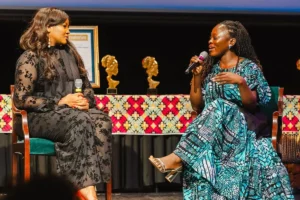
Errin Haines, an editor-at-large for The 19th, has been at the forefront of this re-examination. In her ongoing column, The Amendment, Haines argues that as a Black woman, her relationship to the founding documents is inherently complex. "I am writing about a democracy I would not have been considered a part of as it was declared by our original founders," she notes.
This perspective serves as the cornerstone for the "Declaration of Belonging," a document that does not aim to discard the foundations of the nation, but rather to expand them. It posits that the American project remains incomplete and that the responsibility for "perfecting" the union lies with those who have been forced to survive and thrive despite systemic barriers.
Chronology: From Exclusion to Assertion
To understand the significance of this declaration, one must look at the historical arc of American civil rights:
- 1776: The original Declaration of Independence is adopted. While revolutionary, it excludes women, enslaved people, and non-landowning men.
- 1848: The Seneca Falls Convention marks a formal push for women’s suffrage, highlighting the exclusion of women from the original democratic promises.
- 1865–1870: The Reconstruction Amendments attempt to integrate formerly enslaved people into the body politic, though Jim Crow laws soon follow to strip those rights away.
- 1920: The 19th Amendment is ratified, finally granting many women the right to vote, though women of color continue to face barriers at the ballot box for decades.
- 1960s: The Civil Rights Movement forces a national reckoning with segregation and systemic disenfranchisement.
- 2026 (The Semiquincentennial): As the nation turns 250, the "Declaration of Belonging" emerges as a contemporary framework to address the remaining gaps in equity, power, and representation.
Supporting Data: The Cost of Exclusion
The impetus for this new declaration is grounded in objective social and economic data. Despite contributing significantly to the nation’s infrastructure, many groups remain underrepresented in positions of power and economic security.
- The Care Economy: Research indicates that the care sector—primarily staffed by women and people of color—is a backbone of the American economy. Yet, these workers frequently lack the federal protections and living wages afforded to other sectors.
- The Wealth Gap: According to reports from the Federal Reserve, the racial wealth gap in the United States remains stubborn. The median wealth of white families is significantly higher than that of Black and Hispanic families, a legacy of historical policies that prevented minority groups from accruing property and capital.
- Political Representation: While the diversity of Congress has increased over the last two decades, it still does not proportionately mirror the demographic makeup of the U.S. population. The "Declaration of Belonging" argues that this is not merely a failure of representation, but a failure of legitimacy.
Official Responses and Movement Perspectives
The movement behind the "Declaration of Belonging" is heavily supported by the #WeTheCivic: America 250 initiative. This coalition of nonprofit workers and community organizers argues that democracy is not a spectator sport or a historical artifact; it is a lived experience.
"We were excluded from our founding, but we were never absent from the story," the Declaration states. This sentiment resonates with activists who argue that the "founders" of the nation were not just the men in Philadelphia, but also the enslaved people who built the infrastructure of the country and the activists who marched for voting rights in the 20th century.
Critics of such efforts sometimes argue that these declarations threaten the "cohesion" of the national identity. However, supporters argue that true cohesion cannot exist without truth. By acknowledging the "abuses that have brought us here"—such as the systemic silencing of voices and the legislative exclusion of marginalized groups—the nation can begin the process of "repair."
The Declaration’s Core Tenets
The document outlines a new set of principles for the next 250 years, moving away from "extraction and exclusion" toward "care, repair, and accountability." Its core tenets include:
- Humanity is not conditional: Rights should not be tied to wealth, race, gender, or citizenship status.
- Democracy requires power, not just representation: It is not enough to be seen; one must have a meaningful seat at the table where policy is made.
- The duty of the people: When government fails to protect the rights of all, it becomes the moral imperative of the citizenry to demand change and build more inclusive systems.
Implications for the Future
The release of the "Declaration of Belonging" in July 2026 serves as a catalyst for a broader national conversation. Its implications for policy and social change are significant:
Institutional Accountability
The focus on "repair" suggests a move toward addressing systemic inequality through tangible policy changes, such as guaranteed living wages for care workers, expanded voting rights protections, and investments in communities historically harmed by federal policy.
Redefining Patriotism
The document challenges the traditional definition of patriotism, which often relies on unquestioning loyalty to national history. Instead, it offers a definition of patriotism based on "perfecting the union." In this view, the most patriotic act is to hold the nation accountable to its highest ideals.
A Multiracial, Inclusive Democracy
As the U.S. demographics continue to shift, the "Declaration of Belonging" provides a roadmap for a democracy that is truly reflective of its citizenry. By centering the experiences of those at the intersections of race, gender, and class, the movement aims to create a society where freedom is not a partial promise but a universal reality.
Conclusion: The Work Ahead
The declaration concludes with a powerful assertion: "We are not the original founders of this nation. We are the perfecters of our union."
This acknowledgment serves as both an invitation and a mandate. The 250th anniversary is not the finish line of American history; it is a marker of progress in a marathon that requires constant vigilance. By refusing to be "divided, diminished, or dismissed," the proponents of this new declaration are signaling that the future of the United States depends on the courage to face the past, the honesty to address the present, and the collective will to build a future that finally belongs to everyone.