The G7 at a Crossroads: Global Imbalances and the Future of Transatlantic Cooperation
By Laura Tyson and George Papaconstantinou
June 12, 2026
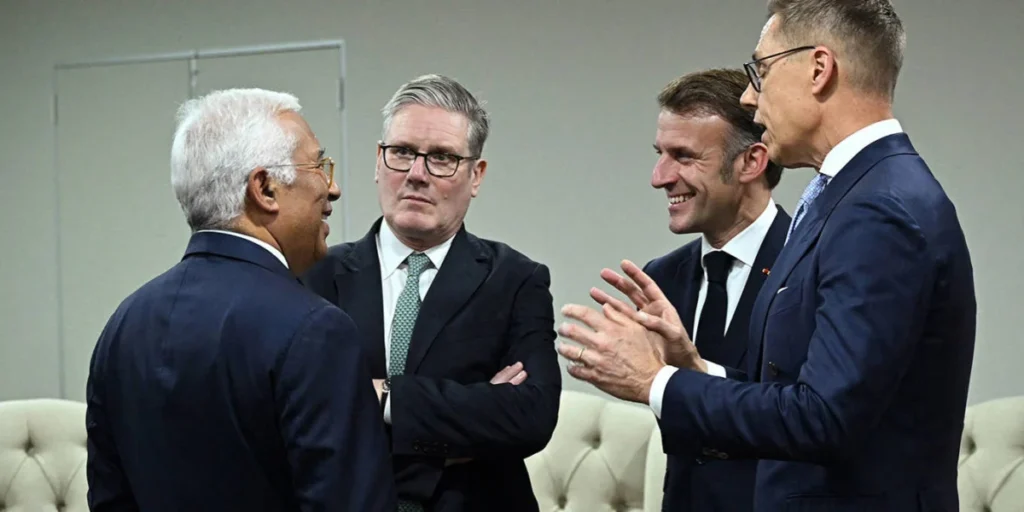
As the global community prepares for the 52nd G7 Summit, set to convene in France from June 15–17, the atmosphere is markedly different from the collaborative summits of the past. Hosted by French President Emmanuel Macron, the gathering serves as a litmus test for the resilience of Western alliances in an era defined by economic fragmentation and geopolitical friction. While the European Union has quietly begun the arduous work of rebalancing its internal economy—shifting from a reliance on massive current-account surpluses toward a model of domestic investment—the United States remains conspicuously absent from the conversation on global fiscal responsibility.
The State of Play: Global Imbalances and Economic Divergence
The core of the upcoming summit’s economic agenda is the persistent, structural imbalance in the global economy. For years, the European Union has functioned as a massive exporter of capital, accumulating significant current-account surpluses. This has historically been viewed as a symptom of low domestic demand and an over-reliance on external growth. However, recent policy shifts within the European bloc suggest a pivot. Policymakers in Brussels and major capitals are increasingly directing savings toward internal infrastructure, green transitions, and technological innovation.
Yet, this shift is occurring in a vacuum of transatlantic cooperation. The United States, despite being the world’s largest consumer, continues to run massive, persistent current-account deficits, fueled by expansionary fiscal policy and a global appetite for dollar-denominated assets. As G7 leaders assemble, the expectation that Washington might engage in a meaningful dialogue about correcting these imbalances—or even acknowledging its role in them—is remarkably low.
A Brief History: From Oil Crisis to Geopolitical Stalemate
To understand the stakes of this summit, one must look back to the origins of the G7. Established in the mid-1970s, the group was born out of the necessity of the global oil crisis. It was conceived as a "steering committee" for the industrialized world, a forum where the leaders of France, West Germany, Italy, Japan, the United Kingdom, the United States, and later Canada, could coordinate responses to systemic shocks.
Chronology of the G7 Evolution
- 1975: The first summit is held in Rambouillet, France, aimed at coordinating responses to the collapse of the Bretton Woods system and the subsequent energy crisis.
- 1980s–1990s: The G7 becomes the primary vehicle for macroeconomic policy coordination, famously overseeing the Plaza Accord to manage currency fluctuations.
- 2008–2010: The G20 begins to overshadow the G7 in terms of global economic influence, forcing the G7 to redefine its identity as a caucus of liberal, democratic, market-oriented economies.
- 2017–2026: A period of internal friction. The rise of nationalist trade policies and the questioning of the NATO security umbrella have created a "values-based" divide within the group.
Despite President Donald Trump’s frequent, blistering rhetorical attacks on America’s closest allies—questioning the necessity of NATO and imposing tariffs on European goods—the United States remains a participant. This participation is less a sign of renewed harmony and more a reflection of the pragmatic reality that, even in an age of "America First," the global financial architecture remains tethered to the U.S. dollar and the security guarantees of the Atlantic alliance.
Supporting Data: The Anatomy of the Imbalance
The divergence in fiscal strategies between the EU and the US is backed by sobering data. According to recent OECD figures, the European current-account surplus has remained stubbornly high, yet the composition of this capital flow is slowly migrating from foreign portfolio investment toward domestic capital expenditure.
Conversely, U.S. federal debt as a percentage of GDP continues to climb, sustained by a global demand for Treasury securities. This creates a "symbiotic imbalance": Europe saves and seeks yields abroad, while the U.S. absorbs that capital to finance consumption and deficit spending.
| Region | Current Account (% of GDP) | Primary Fiscal Driver |
|---|---|---|
| Eurozone | +2.8% | Transition to Green/Digital Investment |
| United States | -3.5% | Expansionary Fiscal Policy/Debt |
| G7 Average | -0.4% | Mixed |
Economists have long argued that this cycle is unsustainable. When the world’s largest economy consumes more than it produces, and the world’s most stable economic bloc refuses to boost domestic consumption, the result is chronic global volatility. Should a liquidity shock occur, the current G7 framework lacks the unified policy mechanisms—such as those seen during the 2008 crisis—to respond effectively.
Official Responses: Silence and Rhetoric
The lead-up to the France summit has been characterized by diplomatic silence regarding the structural economic elephant in the room. President Macron’s office has signaled a focus on "strategic autonomy" and the digital transition, hoping to keep the conversation focused on future technologies rather than past fiscal sins.
On the American side, the narrative remains focused on trade reciprocity. White House briefings suggest that the U.S. delegation will prioritize discussions on "fair trade" and the dismantling of non-tariff barriers, effectively side-stepping the macroeconomic reality that a country’s current-account deficit is, by definition, the sum of its internal investment-savings gap. By framing the issue as one of "unfair competition" rather than "domestic fiscal choice," the U.S. effectively closes the door to any meaningful negotiation on the root causes of global imbalances.
The Implications: A Fractured Future
The implications of this impasse are profound for the global order. If the G7 cannot serve as a forum for economic consensus, its relevance will continue to erode, ceding ground to more diverse and perhaps less ideologically aligned forums like the G20 or the BRICS+ bloc.
1. Erosion of Multilateralism
The G7 was built on the premise that advanced industrial democracies share a common economic language. When that language is replaced by transactional threats and unilateral sanctions, the "rules-based order" becomes a hollow term.
2. Market Vulnerability
Without a coordinated approach to global imbalances, the world remains susceptible to "sudden stops" in capital flows. As the EU pushes for internal investment, the global liquidity that has historically propped up U.S. deficit spending may start to dry up, potentially triggering a spike in interest rates and market volatility.
3. The Security-Economy Link
Perhaps most dangerously, the breakdown in economic cooperation is bleeding into security policy. NATO, which shares six of the seven G7 members, is increasingly strained by the same economic tensions that divide the G7. If allies cannot agree on how to manage their collective economic health, it becomes increasingly difficult to justify the shared security costs that maintain the current geopolitical equilibrium.
Conclusion: A Call for Realignment
The 52nd G7 Summit in France is not merely a meeting of leaders; it is a diagnostic test for the Western model of governance. The European Union has taken the first, difficult steps toward rebalancing its economy to better support domestic growth. However, this effort will ultimately be frustrated if the United States continues to treat global trade as a zero-sum game rather than an interconnected system.
For the summit to be a success, the agenda must move beyond the superficial friction of trade wars and address the structural reality of the global economy. Leaders must move away from the rhetoric of blame and toward a coordinated framework that encourages European investment while managing the U.S. fiscal trajectory. Without such a shift, the G7 risks becoming a relic of a bygone era—a club of nations that can no longer agree on the very economic principles that once made them the architects of the modern world.
As the delegates descend upon France this month, the world will be watching. The question is not whether the G7 will survive, but whether it can still lead. The path forward requires a level of diplomatic courage that has been sorely lacking in recent years. Whether Macron, the U.S. delegation, and their counterparts can muster that courage remains the defining uncertainty of the 2026 summit.